


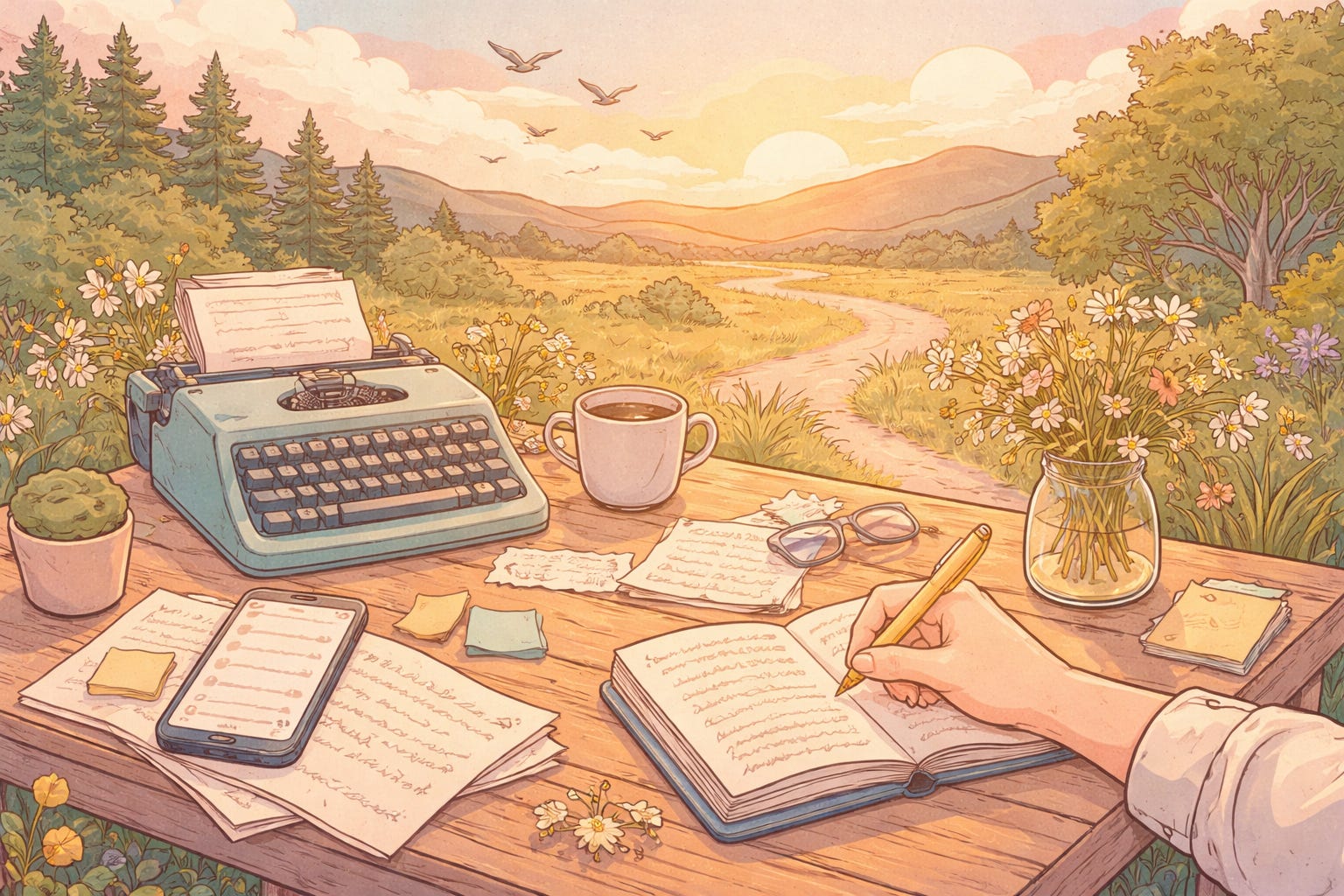
Throughout my life, I tried to journal. I enjoyed writing down my thoughts and seeing my growth and journey over time. But I always wrestled with the practice.
At first, I wasn’t sure how to journal. Should I write each day by listing activities and everything I did? Or should I write about key moments when they came? How personal should I be? Over time, I developed my own style, which became a mix of daily events and my thoughts about the things I was struggling with or aiming for.
But even with these improvements, I still journaled in seasons. I would write consistently for months, then stop for months. It wasn’t until I adopted microjournaling that my entire habit changed. Instead of writing on and off, I found myself writing consistently—and often more than once a day.
Microjournaling is the practice of writing smaller entries about specific thoughts and ideas throughout the day. It functions more like a stream of consciousness than a polished, formal, long-form entry.
Part of my challenge with journaling was believing the writing wasn’t useful. It helped with thinking and mental health, I would argue, but then it seemed to disappear. Over time, I realized those entries were often seeds for future social posts, essays, and entire positions with real meaning and signal. Microjournaling helped make that connection clear.
Capturing the moment before it fades
The practice removes the pressure of fancy, formalized writing. Your mind no longer has to stay cluttered throughout the day because, as soon as you have an idea, a thought, or a piece of information someone shares with you, you can put it on paper. It isn’t perfect. You express yourself in the moment. And, in a way, you are living the words Frank Herbert writes in Dune:
“The mystery of life isn’t a problem to solve, but a reality to experience.”
The best way I imagine microjournaling is through Ernest Hemingway. Throughout his career, he was known for writing down his experiences. After an interesting conversation, he would often hurry to a quiet place to capture the scene from memory. Many of these moments later sparked fictionalized scenes in his work.
The author Natalie Goldberg also describes this practice when you face challenges. She says, “Write what disturbs you, what you fear, what you have not been willing to speak about. Be willing to be split open.”
What we lose when nothing is recorded
If you’ve ever looked back on a period of your life, such as middle school, the years of raising toddlers, or buying your first home, the memories often exist only in broad strokes. You remember emotions, a few random details, key highlights, and a general sense of that time. But over time, much of it disappears. This is a personal loss first, but it is also a loss to everyone around you.
Think of presidents, historic authors, and people who have shaped the world. Schools and universities dedicate entire courses and programs to studying their works and actions, sometimes prolific and sometimes sparse. We analyze what they were thinking and speculate about what they might think today. The more these individuals recorded their inner lives, the more we are able to understand them and allow that understanding to shape our own lives and world. This is a gift. As George R. R. Martin writes, “A reader lives a thousand lives before he dies.” The same is true of reading journals, letters, and personal records.
Tragically, recording our own lives and moments is more difficult than it seems. Pure documentation is not the problem. We bury our phones in photos, messages, and endless data points. Yet this abundance can work against us. A Psychological Science study once found that when we take photos, we tend to remember less of what happened, trading presence for preservation. Much of this paradox has to do with intention and attention.
Microjournaling restores both by adding reflection to the act of recording and turning moments into meaning rather than mere artifacts.
Tools that let thought move freely
In my own microjournaling experience, tools have made a big difference. I tried handwriting, but it felt slow and messy. I even tried e-ink writing with the Kindle Scribe, but writing while holding the device wore down the felt stylus and eventually bent the tablet from pressure. Typing, by contrast, was fast but felt impersonal and filled with distractions.
Instead, I relied on the iOS Notes app. It has a simple, sticky-note-like design that lets me write whatever I need, no matter how short or long. I can organize notes into folders, add searchable hashtags, and rely on automatic metadata for future reference.
When I want to think without the distraction of my phone, I use an e-ink smart typewriter. This has been a major development for me. I type quickly and freely, then access the file on my computer, scan it for grammar issues, and move it into my Notes app. Some of these notes grow into larger ideas, projects, or even essays like this one.
Short writing, clear thinking
Microjournaling is for everyone, especially in the modern age. Everything is short-form. And while short-form consumption can be damaging over time, short-form writing supports two clear goals:
Getting your thoughts out quickly
Practicing the discipline of clear thinking and writing
For these reasons, I see microjournaling as a key skill. It doesn’t need to replace traditional journaling; the two can work side by side.
Traditional journaling is long-form. It’s well-suited for recounting experiences, telling stories, and developing fully formed ideas. While it may not need to be a daily habit, a consistent rhythm, like weekly, offers immense value for reflection and record-keeping.
If you practice both together, it might look like this:
Traditional: Reflect after a period of time with a bird’s-eye view, or recount a long, detailed scene.
Micro: Record notable thoughts, emotions, and key information, the seeds for larger works like traditional journaling, essays, or reflective social posts.
Both formats are useful, but I value microjournaling more because it is accessible and doable, regardless of someone’s busyness or stage of life. Over time, it naturally feeds into deeper reflection and traditional journaling, offering many of the same benefits.
When small notes start to accumulate
Microjournaling also compounds. Over time, it creates a collection with recurring themes. These small entries can eventually become some of the most valued works we know, collections like Meditations, Ecclesiastes, or memoirs like A Moveable Feast.
These larger works, revised and shaped for others, are possible for anyone. Even if they’re never shared publicly, they can influence family, friends, and future generations.
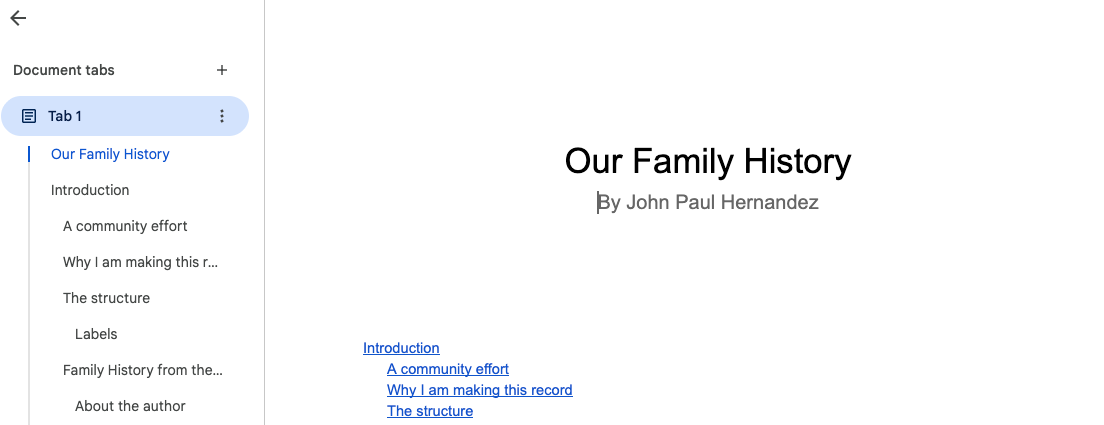
One project that emerged from this practice is my genealogical research. Several years ago, I began building my family tree. That led to finding relatives around the world, visiting them, forming deep relationships, and taking overseas road trips. I uncovered major discoveries, including 150-year-old family homes. I recorded all of this and am now working on a memoir-like record that will never be published. It’s for me, my family, and future generations. It is my story for them.
Letting the practice stay messy
There are moments when it’s tempting to impose structure or themes on microjournaling, but that defeats the point. Micro entries should be messy. Their purpose is to record thoughts, emotions, ideas, and information. Over time, patterns emerge, and larger projects take shape.
But the deeper value of microjournaling may not be personal at all. We live in a moment that documents everything and understands very little. Our lives are captured constantly, but rarely interpreted. If fewer people leave behind private records of how they thought, doubted, and changed, the future will inherit an archive of images without context and words without inner life. Microjournaling is a small act, but it pushes against that silence. It preserves not just what happened, but how it felt to live through it.
This was superb to read and ponder. Switching from short-form consumption to on-the-spot, short-form writing sounds like a brilliant way to heal an overstimulated mind. Thanks for sharing your own experience so generously. One question: why do you prefer e-ink typing over e-ink handwriting?