


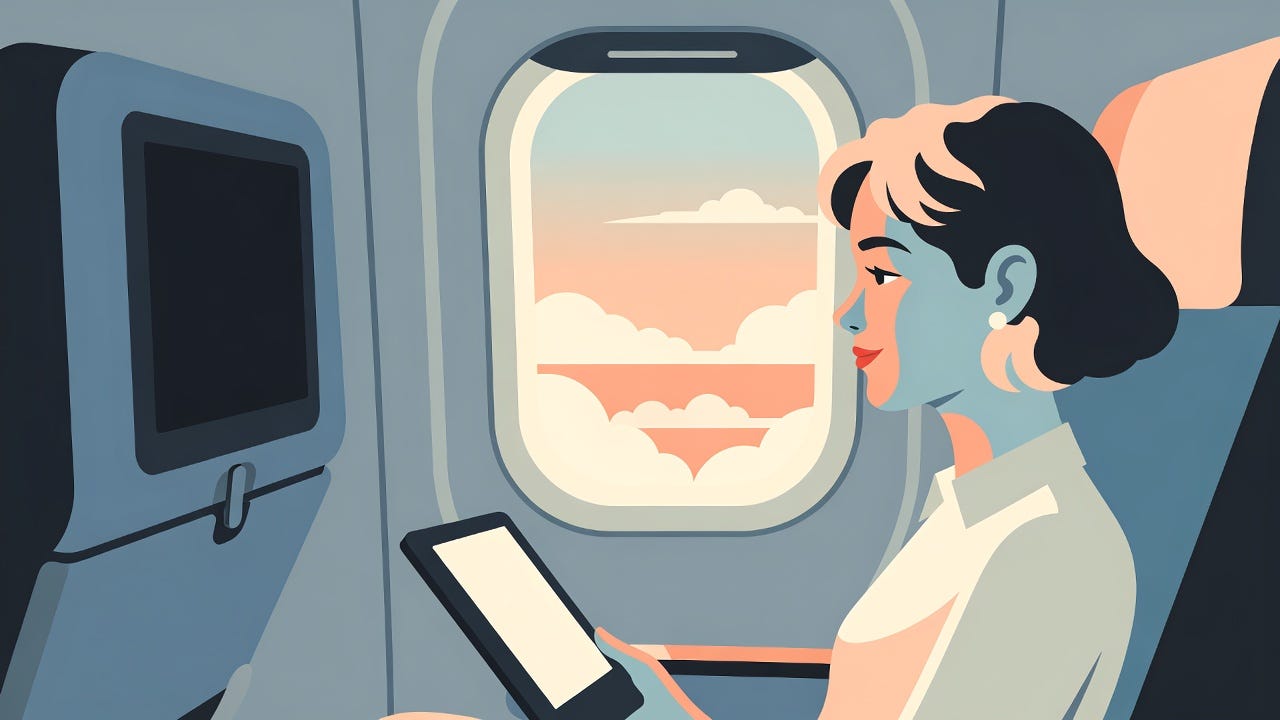
I remember vividly, on multiple occasions, flying on an international flight for about nine hours. I’d read a little, but the ever-tempting micro screen in front of me on the seat looked so alluring, so easy, that I’d turn it on and browse for movies.
After I watched the first movie, it was hard to stop. I’d watch one after another, eventually watching several until the pilot announced the descent.
I usually don’t eat on planes because of bad experiences with food poisoning and a generally upset stomach. That, combined with staring at a screen and some sleep deprivation, gives me an immediate migraine after landing—one so strong it’ll last over a day if I don’t take medicine.
In these moments, I realize just how damaging technology can be, even in its facade of helpfulness. For some reason, technology often works against our biological needs.
Blue light screens disrupt our sleep. Social media apps promise entertainment, but their addictive algorithms create major issues for our dopamine systems. Fast food delivery apps offer convenience but make it harder to eat healthy at home and responsibly steward our budgets.
Discipline and balance help us get the good out of these technologies while minimizing the bad. But what we see over time is that more suitable technology often exists, and the ones we use today are designed for maximum consumption, not for our healthiest selves.
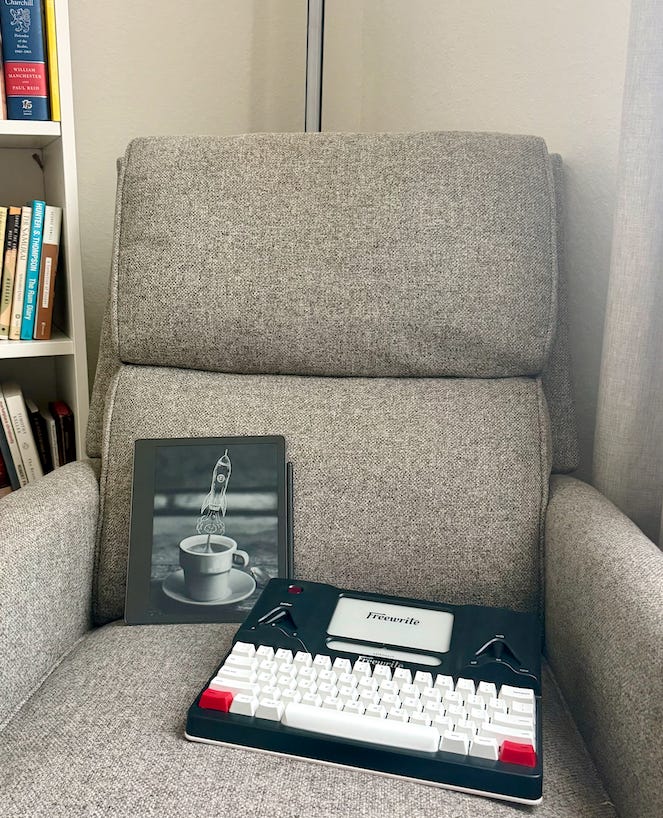
Take e-ink, for example
E-ink technology makes reading feel like a natural experience. There’s no blue light, and you can read without distraction. Originally, this tech was a single-use innovation. But now dumb phones and AI assistants use the technology. You can use these devices to do the basics that a modern person can’t live without—GPS, email—all on an e-ink screen.
Yet tech companies and modern demand see these as niche products. Though if things continue moving the way they are—with Gen Z wanting to spend less time on social media and people generally looking for human interaction—I believe e-ink is the future.
This movement doesn’t need to limit itself to e-ink, though. Technology has to start with biological needs so it works to enhance us, not work against us.
Technology should start with your biology, not end with it
Today, technology often serves dopamine. Like a drug, it provides excitement but rarely offers long-term sustainability. Our sleep suffers, as do our mental and physical health. Instead, technology should focus on optimal living.
Why most “solutions” to screen addiction don’t work
This kind of technology doesn’t mean tacking on Do Not Disturb buttons or placing time restrictions on devices. That’s just patching or mitigating a problem—like a smoker who goes through two packs a day choosing to smoke three fewer cigarettes. It’s marginally helpful and doesn’t solve the core addiction.
Plus, we’re now finding that some of these steps aren’t even helpful. A report on children from the American Academy of Pediatrics confirms what many parents already suspect: screen time limits alone are no longer enough. The issue isn’t just how long kids stare at screens, but how platform designs—autoplay features, algorithmic feeds, endless notifications—are engineered to hijack attention and override healthier activities.
This calls on all of us to take a step back and ask why we choose a particular technology and what it will ultimately do to us. Are the benefits worth the downsides? And how can we maximize benefits while making the risks as minimal as possible?
We can try this patchwork approach, but we can also start from the beginning by choosing technology that puts human nature first. This type of tech can build us up and support us from the ground up.
This is why I find e-ink so satisfying—it’s one of the most natural states technology can provide. It’s like reading a book, which has existed in many forms since early civilization wrote on clay tablets. It also has clear limitations with processing power and running certain apps, full of tiny delays or limited graphics; limitations that prevent the everyday overconsumption we see with conventional screens.
These examples bring up important points. Technology should be practical, purposeful, and natural. If a device does too much, it becomes counterintuitive to what we need.
The simple truth nobody wants to hear about screens
As King Solomon said, to paraphrase: life is simple; humans made it complicated. That’s what complex technology does to us. Comedian Jimmy Carr recently spoke about how if you take away screens, you feel like you’re in the 1970s again. There’s no cool app, social network, or generative AI. And this is what so many people crave when they think of the days when you spent more time outside or interacted with more people.
I deeply connected with what Carr said. In my personal experience, I feel this on a blue-skied Saturday morning. My wife and kids and I all jump into the car and drive to the beach. Thanks to the sand, we don’t want to have our phones exposed to elements that scratch the screen, nor do we want it in the sun, so it’s tucked away somewhere deep in a beach bag in a ziplock bag. There is no technology. We enjoy the sun and the wind and the water. If we have more family or friends with us, we engage in conversation for hours.
Recently, we almost saw a Blue Origin rocket launch from the shore and spoke with a photographer waiting for the moment (though it got canceled). On that same day, we played the card game version of Monopoly. This was a life one could live in the ‘90s, and it was entirely accessible to us. There’s school, work, and other things that require us to stay connected with technology, but many of those things can also have boundaries and mitigation. When planning for a project at work, for example, start with pen and paper, and only when you have a clear idea start working on the computer.

Next time I board that nine-hour flight, I’ll know better. An e-ink reader instead of the seat-back screen. A book instead of autoplay. Maybe even just the thoughts I’ve been too distracted to think. No migraine waiting at the gate, no lost day recovering, but the clarity that comes from technology designed for humans, not against them. E-ink isn’t the future because it’s innovative. It’s the future because the best technology often feels like no technology at all.