


There’s an attractiveness to the decisive, bigger-than-life person. They know what they want, and how to influence and gather those around them. We often see this as someone who knows the way with pure dedication.
But assuredness, no matter the circumstances, in a Bonaparte style, is not what gives these people influence. Assuredness without humility or the ability to take a step back is stubbornness and pride. It’s what leads to the greatest falls and exiles of human history.
The difference between stubbornness and pragmatism lies in recognizing the more realistic paths and adjusting to that reality.
The 26th president of the United States, Teddy Roosevelt, was a master of pragmatism. Early in life, before any of his accomplishments, he wrote that he couldn’t know whether he had the ability to succeed, but he knew he had the will to try and push through failure, regardless of actual ability.
Confidence doesn’t require certainty of outcome, but it requires certainty that you’ll show up and do the work, win or lose.
Seeing clearly, changing course
Living much of his adult life post-Civil War, he was the child of one parent from the North and one from the South. He loved the outdoors but also knew how to polish up in his Ivy League circles. In many ways, he held to completely different, and sometimes opposing, American cultures.
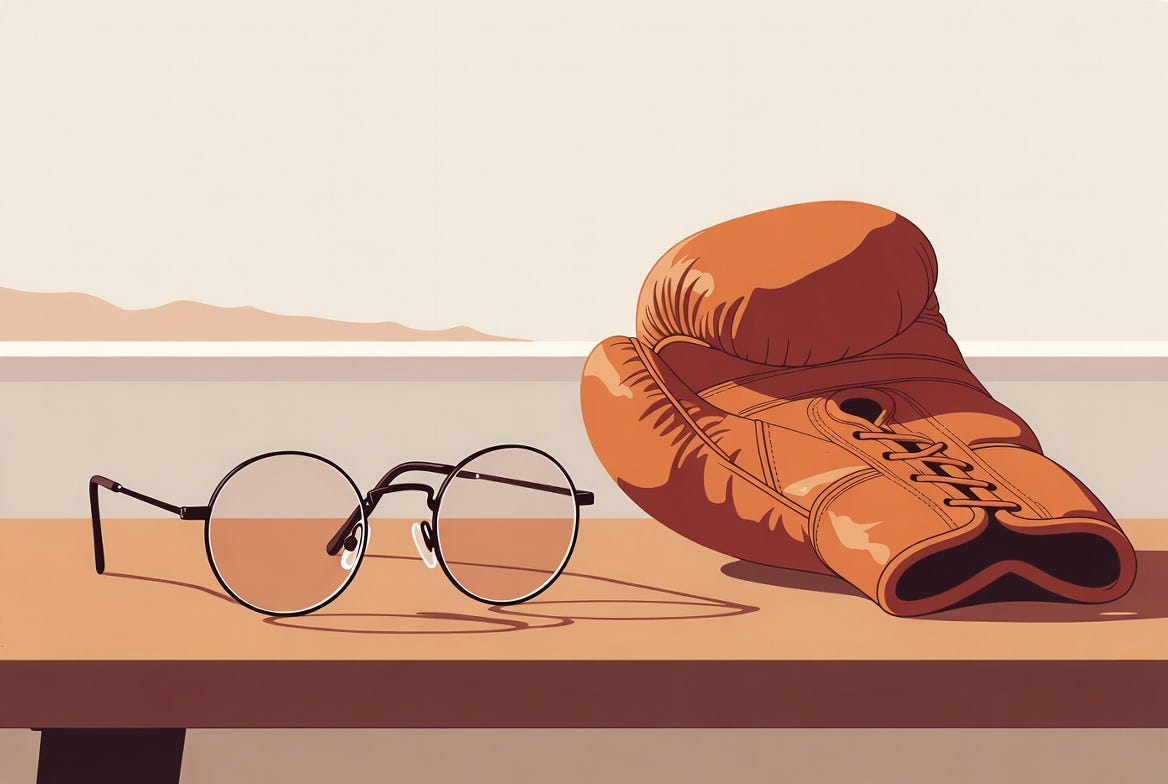
As a young man, Roosevelt was given a gun but turned out to be a poor marksman — until an eye exam revealed he simply couldn’t see well. Once he got glasses, he said he had no idea how beautiful the world was. It’s a small story, but it’s a good model for pragmatism itself: half the battle is diagnosing the problem correctly. You can’t adjust your aim if you don’t know what’s actually in front of you.
The observer can’t help but notice his multi-layered background and his ability to change his mind through experience and pragmatism, as seen when he went buffalo hunting.
Roosevelt dreamed of going on a hunt for buffalo. Thinking of his love for the sport and nature, he said, “One of the chief attractions of the life of the wilderness is its rugged and stalwart democracy; there every man stands for what he actually is and can show himself to be.”
But when he arrived and saw how majestic the animals were, and the danger humans posed to them and their future as a species, he quickly changed his tune. Roosevelt later started a lobbying group to protect buffalo, and as president, he created some of the most expansive protected and natural parks in history.
Finding solutions in different places
As police commissioner, he showed how stern he could be by cleaning up the police force in New York. The corrupt, quite understandably, did not like him. But he cleaned up the force with moral clarity. And it was this discernment that won him favor with honest police officers and the public.
While he showed this strictness, he was realistic. His pragmatic approach was to walk the streets nightly and during the day himself, which many officers didn’t expect to happen so often. As he put it, the work gave him a glimpse of the real life of the swarming millions. He got firsthand experience of what was happening on the force and abuses as subtle as officers failing to clock in on time.
That same instinct for pragmatism over ideology showed up in how he handled New York’s Lower East Side. Roosevelt added Jewish officers to the force, reasoning they’d serve the Yiddish-speaking community better than the existing roster.
When an antisemitic speaker took to the street to rail against the community, Roosevelt didn’t shut him down — he let the speech happen, on constitutional principles, but sent officers to keep the peace while it did. It’s a small moment, but it shows pragmatism applied to free speech and the safety of the people that speech targeted.
While Roosevelt had moral failings, like his early, years-long abandonment of his daughter, and his expectations of his sister to care for her in the wake of his first wife’s death on Valentine’s Day, there’s no doubt his pragmatism became a hallmark attribute to the success he had in every role he touched.
That same pragmatism showed up again years later, in a much smaller decision than any of his presidential ones. When the Spanish-American War broke out and Roosevelt was offered command of a volunteer cavalry regiment, he turned it down — not out of modesty for its own sake, but because he judged himself too inexperienced to lead it well.
He suggested his friend Wood take the colonel’s post instead, and Roosevelt served under him as lieutenant colonel. He made the call without knowing how it would turn out; only that it was the right one for the moment.
The instinct to step back when the moment called for it, rather than reach for rank because it was offered, is the same instinct that let him change his mind about buffalo or put on a pair of glasses. Pragmatism sometimes means recognizing you’re not yet the right person for the job.
Unity across difference
As a Rough Rider, leading his platoon in Cuba during the Spanish-American War, also known as the Cuban War of Independence, his soldiers and the public marveled at how he could rally a tradesman from a small village and a rich man from the city onto the same force as brothers.
Though Roosevelt lived long ago, his confident pragmatism is desperately needed. Our countries are divided, and the world faces novel wars and incomprehensible technological innovations.
What we can learn from him is that he was always open-minded, knew what he wanted but remained flexible, and had a desire to get firsthand experience and information — the kind of flexibility, realism, and optimism that’s vital in the face of uncertainty.
Using these principles, we can build our confidence while also leaving the door open for growth, new experiences, and empathy as we make complex decisions in uncertain situations.