


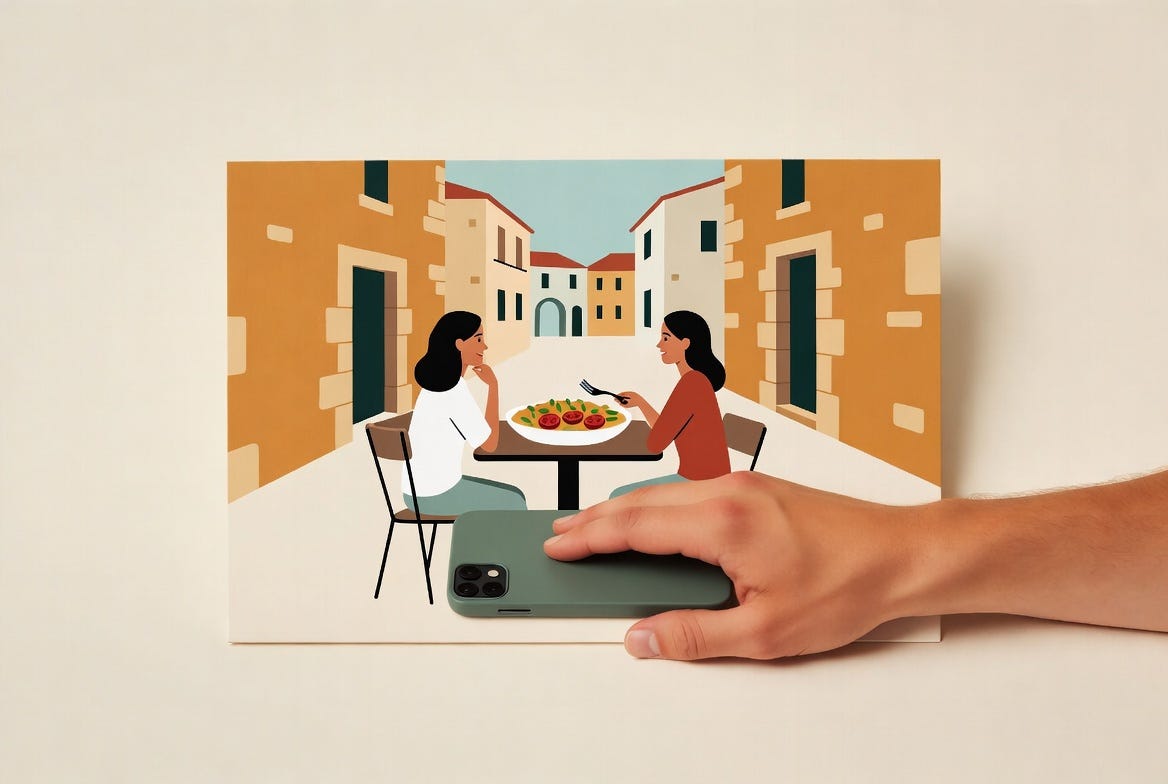
We’ve all had a moment when we gather with friends and an irresistible question bubbles to the forefront.
Perhaps we’re eating a dish with tomatoes, and someone wonders how that dish originated. Twenty years ago, these questions would have led to a thirty-minute conversation on the origin of tomatoes and how the dish came to be.
And even though the conclusion is unresolved or even wrong, something more valuable is gained.
A great conversation happens, relationships deepen, and everyone participates in an intellectual exercise that reveals new insights and alignment.
Today, it looks a lot different. The same question gets typed into a phone. Not only is the quality of the conversation diminished, but so is the intellectual opportunity that comes with genuine, unaided curiosity.
How we used to think
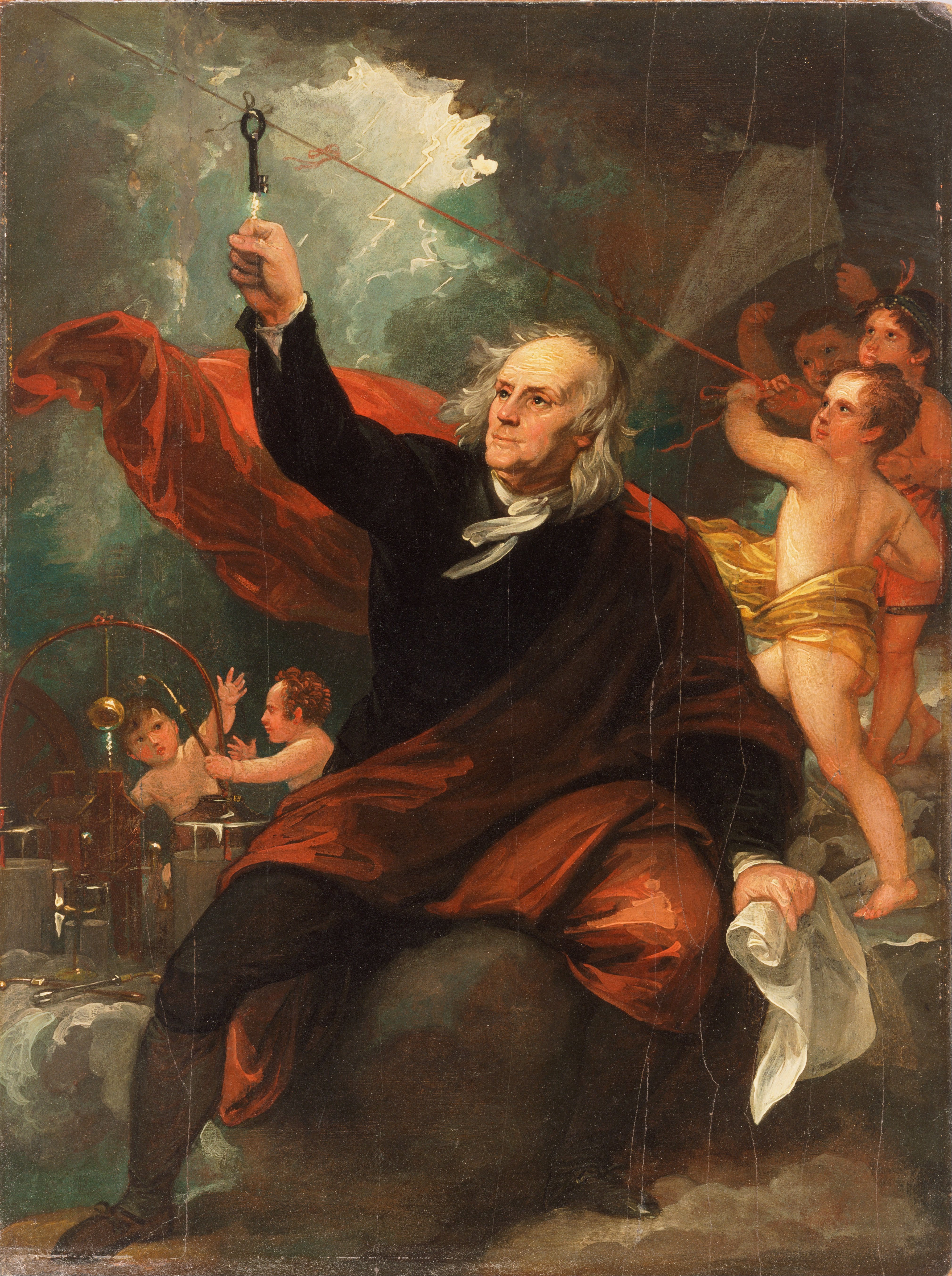
In the past, we’ve seen great inventions and ideas born from this kind of unbridled, unhurried curiosity.
Benjamin Franklin, for instance, flew a kite to learn more about lightning and electricity. He created bifocal lenses by experimenting with his own vision.
Then there’s Leonardo da Vinci, constantly sketching the human body and mechanical objects to understand form and reality better. In my library, I carry a collection of da Vinci’s sketches. It’s a great source of inspiration and a reminder to follow your curiosities.
It’s easy to see these efforts as inefficient or unproductive. I’m sure many past projects went unfinished or led nowhere. But even those incomplete ideas stacked up together, eventually contributing to great inventions and revelations.
Today we have nearly every answer to nearly every question, seconds away, through a search engine or AI. But those instant answers fail to satisfy genuine, productive curiosity. Research also continues to show diminishing cognitive abilities from AI.
What’s lost in the exercise of using your and your friends’ intellect to find an answer is the chance at genuine insight, something original, drawn from real experience.
How forced proximity and limitations can be productive
It’s worth remembering how many great thinkers never left their town. In their entire lives, they may have traveled only a handful of times, mostly staying rooted in one small place. But because they were tied to that place, because they were stuck with it, they were able to dig deep into their curiosities and arrive at real moments of enlightenment and thought.
The travel writer, Jan Morris (1926–2020), explained:
“Worldwide travel is not compulsory. Great minds have been fostered entirely by staying close to home. Moses never got further than the Promised Land. Da Vinci and Beethoven never left Europe. Shakespeare hardly went anywhere at all—certainly not to Elsinore or the coast of Bohemia.”
As someone who has traveled much, and often, this makes me pause. While broadening perspectives through experience is important, so is deepening the ones you already have.
Limitations, then, provide breathtaking opportunities. We see this across art, creativity, and productivity. If someone is asked to write an article for a magazine, they face limitations: a subject, a scope, a word count, format restrictions, and editorial guidelines. Within that framework, a writer can develop something far more valuable than if they had total freedom, because the constraints force them to wrestle and dig deep, the way a sculptor works against the resistance of stone to create something beautiful.
Since we now carry tools like search engines everywhere, we might be more intentional about how we use them, especially the impulse to look something up mid-conversation.
What do we do with the search bar?
Holding off allows the mind to form its own thesis, an idea that may be more insightful even if it isn’t entirely correct. It fosters original thinking. In conversation, when someone offers to look something up, we can politely ask them to hold off, because we want to hear what they think first. What follows is often something profound and original, something that comes from another person’s mind and stays with you precisely because you won’t find it anywhere else. It becomes a unique experience shared between two people.
Practicing this kind of intentional curiosity stretches the imagination. It gives boredom somewhere to go, and gives the mind practice in articulation.
This kind of preparedness matters most in emergencies, when time isn’t on your side, and research isn’t possible or practical. In those moments, it’s the person who has trained their curiosity without digital aid who is equipped to act sharply and decisively, not dependent on a Wi-Fi connection or thirty spare minutes, but ready to draw on the knowledge and experience already built up over a lifetime.
This kind of active, analog curiosity is how we become better thinkers. It doesn’t mean we should eliminate search engines. They’re useful for education, for larger research projects, and for confirming details after the brainstorm. But they shouldn’t replace genuine human thought.
That’s where an original signal comes through: an idea that means something because it has substance, because it has something new to say.