


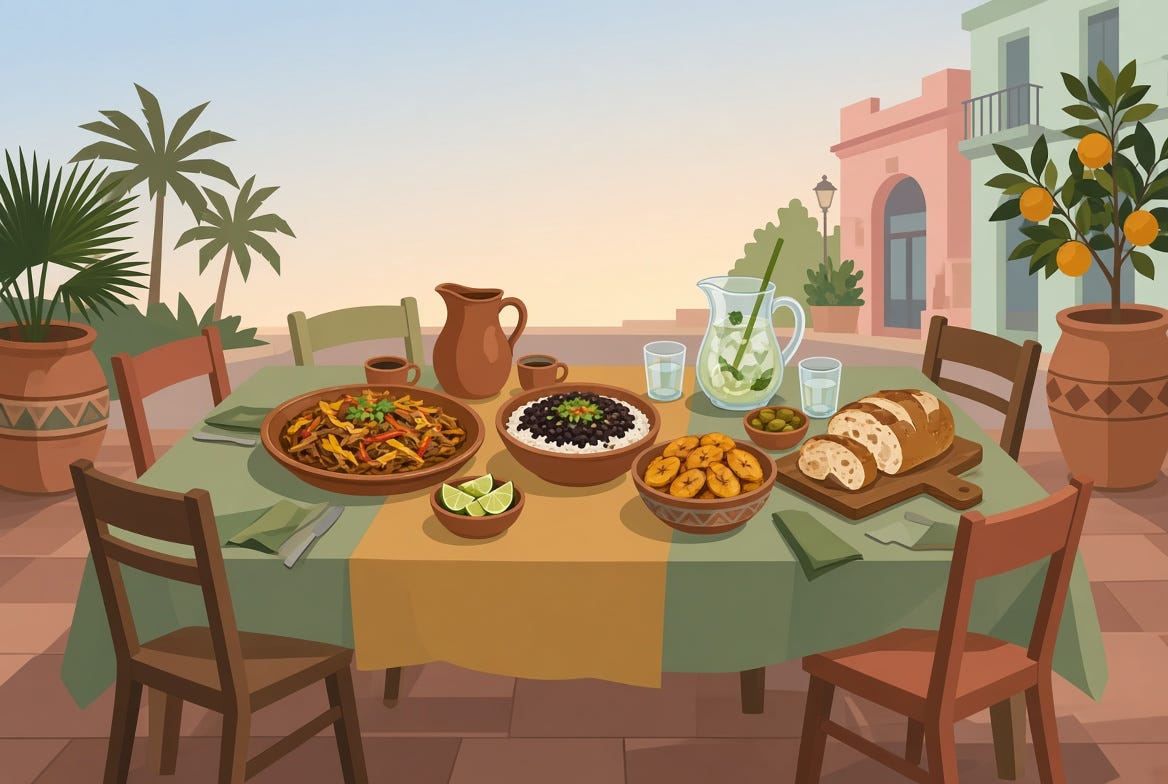
I wrote a piece for Business Insider earlier this year about paella. It was a wonderful exercise and thought experiment on how I used the dish to make new friends and grow as a person.
Readers connected with me asking for recipes. But others responded asking or highlighting the communal eating aspect of the piece. Inspired by these responses, here’s my reflection on eating to build community.
Sobremesa, the practice of lingering in conversation with friends and family for hours after a meal, is well known in Spain, Latin America, and other countries. In fast-paced cultures, however, it is not. Speed dominates. People want their meal quickly and the check as soon as they take the last sip.
In some ways this is practical. You may need to get back to work, or you’re traveling and simply don’t have hours to spend talking with someone. Yet the same urgency seeps into ordinary eating habits and erodes the chance to connect with those around us.
Meals across time
Meals like this are not new. One of the most consequential, depicted in Leonardo da Vinci’s Last Supper, shows Jesus with his disciples on the night before his crucifixion; a meal still remembered daily in places of worship and throughout history. Thanksgiving, another shared table, once connected two very different peoples in the Americas.
When Ernest Hemingway wanted to personify Paris in his memoir, he titled it A Moveable Feast (Paris est une fête). His stories revolve around conversations and pivotal scenes with other writers and artists. In the book, he writes:
“If you are lucky enough to have lived in Paris as a young man, then wherever you go for the rest of your life, it stays with you, for Paris is a moveable feast.”
Though the metaphor describes a place, it is no surprise that Hemingway reaches for a feast to convey the lasting sensation of a memorable experience.
Today friendships are formed over food, but so are business deals, industry-shaping policies, the beginnings and endings of wars, and consequential decisions of every kind. These moments cannot happen at speed. They are sessions marinated in the food itself, in unhurried time, in the freedom to grow closer and dig deeper into concerns and ideas without restriction.
Communal eating forges stronger friendships and families; it can even bring enemies together.
Purposeful eating
Shows such as Chef’s Table, Somebody Feed Phil, and Stanley Tucci: Searching for Italy capture this theme: eating together without a time limit as a shared human experience. One chef who appears across several of them is Dario Cecchini. A self-described butcher first and chef second, Cecchini has a contagious personality: thick mustache, wide smile, and jolly demeanor that magnetizes everyone in the room. A central part of dining at his establishments is sitting with friends and strangers at a long table. While you enjoy one of his Florentine steaks or other memorable dishes, he cooks nearby, converses, and reenacts lines from Shakespeare. The food is the reason people gather, yet it is not the center of the experience. The people are.
Yet if you live in a culture that does not nurture these ideas, sustaining sobremesa can be difficult. Friends may expect the meal to wrap up within 45 minutes and the table or restaurant to clear soon after. At many restaurants, the check appears while you are still finishing your last bite. Embracing sobremesa therefore means swimming against the current.
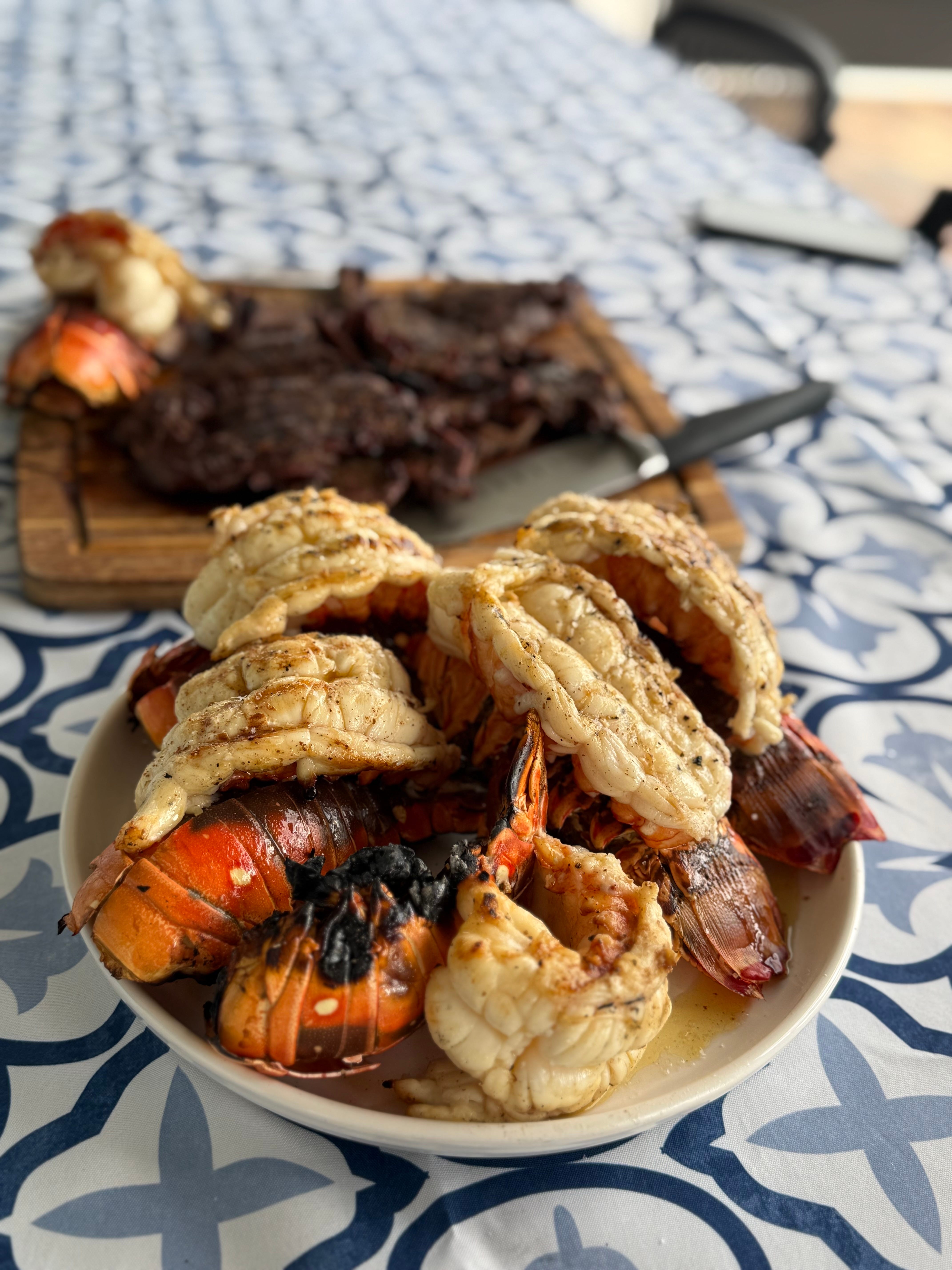
There are practical ways to cultivate communal eating even when the culture pushes the opposite direction. At home, it can be as simple as waiting to put food on the grill until after guests arrive. Serving the meal in stages naturally slows everyone down. At the end, you can ask deeper questions and invite longer conversation.
For restaurants, choosing the right place matters most. It is often worth traveling farther or spending a little more if the setting allows you to linger. Even if that means eating out less often, purposeful meals strengthen relationships far more than hurried ones. Once there, order deliberately—perhaps an appetizer first without committing to the rest of the meal—so the evening unfolds gradually. With an appropriate tip, you can politely extend the night with friends and family.
As you plan these kinds of meals over time, you begin to shape a community that expects sobremesa and willingly makes room for it.
While time may feel scarce, most of us can point to daily stretches that hold little real value: long social-media sessions, or a couple of hours spent in bed on a phone Googling nothing in particular. Relaxation matters, but idle time on devices often does the opposite. It feeds dopamine loops and residual stress. Redirecting that time into shared meals can create deeper experiences that refresh both extroverts and introverts when the setting is right.
If we learn to embrace communal, slow eating, we can push back against many pressures of modern life: digital addiction, the relentless pace of work and culture, and the rise of loneliness. In their place, we can build deeper, more meaningful, and healing relationships.
My table
In my own journey with paella, I learned to take my time. The dish demands so much preparation that I refuse to scarf it down, and my guests experience it the same way. We slow down. Afterward, we spend the remaining hours catching up on life. We remember these meals a year or two later because they cement relationships and deepen them.
Within my own extended family, we gather weekly whenever we can. We share long meals in the backyard, usually from the grill, talking about whatever is happening in our lives and filling the afternoon and evening with encouragement and love. Neighbors have noticed these dinners. We often share food with them, and sometimes they join us. The meal itself is enjoyable, yet we linger because it is not the food that sustains us, but each other.
It’s purposeful, communal eating that can unlock deep relationships and strengthen our quality of life.