


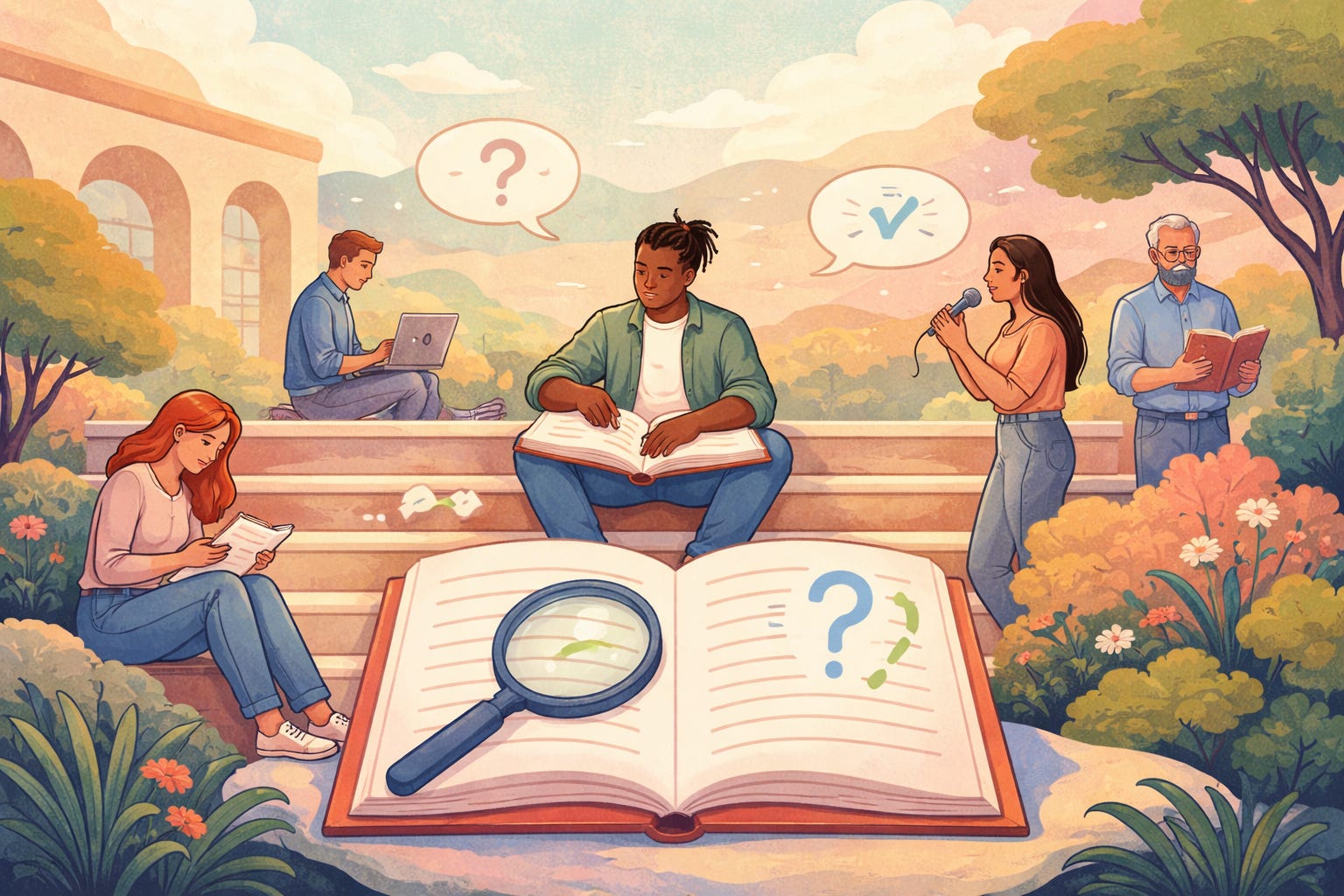
There is something uncomfortable about watching someone learn.
Learning is slow, awkward, and full of visible gaps. It resists the clean arcs we prefer to present in public. That discomfort surfaced recently when a popular streamer, Kai Cenat, was mocked online for stopping mid-reading to look up a word while reading Atomic Habits by James Clear.

The moment itself was ordinary. Cenat’s goal was simple: to read aloud and improve his articulation so he could become a better speaker. But the reaction was revealing. While some framed the pause as ignorance, the reading community and learners in general responded with overwhelming support.
That response points to something deeper.
People do not merely tolerate vulnerability; they value it.
More than that, the moment highlights the importance of learning when you do not know, and why it is acceptable, even necessary, to do that learning in public, especially when you are not good at something yet.
Learning in public can feel like choosing exposure. You use an audience as accountability and risk judgment along the way. But it also offers forms of growth and virtue that are difficult to find anywhere else.
The desire for wisdom before appearance
Frederick Douglass, the abolitionist and civil rights leader, did not know how to read until he decided to learn, despite literacy being illegal for enslaved people at the time. History remembers him for his moral clarity and political courage, but at his core, Douglass was also a radical learner.
He openly described his education as fragmented and incomplete. He learned from scraps of paper, newspaper clippings, overheard conversations, and borrowed texts. Rather than hiding those gaps, he acknowledged them and worked through them.
Critics noticed. Many attacked him not on moral grounds, but intellectual ones, even claiming he could not have written his own speeches. These accusations were false, and Douglass refused to let them derail him.
Instead, he made his learning visible.
He tested ideas out loud, refined arguments in front of live audiences, and adjusted tone, pacing, and vocabulary over time. For Douglass, learning was not about appearing educated. It was about becoming free. That openness shaped his legacy. We remember him not as someone who emerged fully formed, but as someone who became who he was through sustained effort and public growth.
Choosing to learn in public
A modern expression of this idea appeared in the “building in public” movement. Entrepreneurs, creators, and thinkers chose to develop their projects openly, sharing progress, setbacks, decisions, and outcomes with their audiences in real time.
Creators associated with ideas like Small Bets, by Daniel Vassallo, use this approach by explaining what they are building and why, while also sharing struggles, wins, and processes along the way. This transparency helps others learn, but it also creates trust and momentum as projects grow.
What is notable is where this practice stops.
While building in public is now common in business, it is far less visible in areas that feel more personal. People might share weight loss or fitness progress, but it is rare to see someone openly sharing struggles with reading, speaking, or learning itself.
The risk and the responsibility of visibility
One reason is obvious. The internet can be cruel. There are well-known cases, like Rebecca Black, where young people shared creative work publicly and were subjected to years of ridicule and harassment. That kind of environment discourages openness.
Still, as internet users, we have more agency than we think. We can choose platforms, communities, and corners of the internet that attract the right people. And beyond that, we have collective responsibility.
Even if we cannot eliminate negativity, we can defend and encourage those who take the risk of being vulnerable. Just as importantly, we can participate in our own visible learning journeys.
Maybe you are an excellent reader but uncomfortable with public speaking. You might practice by giving toasts, reading aloud in small groups, or posting recordings of your progress. Doing so creates accountability, invites helpful feedback, and often draws encouragement from people who recognize themselves in your effort.
Why learning in public matters
Learning in public is a deeply human experience. It is why we are drawn to stories, whether books, films, or biographies. We do not connect with perfection. We connect with struggle, growth, and empathy.
Sharing learning publicly allows others to witness that process in real time. They do not just watch outcomes. They watch becoming. And in doing so, they often feel inspired to begin, or continue, their own journeys.
It is true that most people are too focused on their own lives to pay close attention. But it is also true that many people are quietly looking for examples of courage. They do not need flawless heroes. They need visible ones.
When you learn in public, you often discover you are not alone. Others reach out with similar struggles and goals. Communities form. From there come deeper human connections, shared projects, unexpected opportunities, and continued growth.
We can all choose something to learn in public. Once we decide what that is, we can set goals focused not on outcomes, but on consistency and progress. By sharing along the way, we give others permission to do the same. Sometimes, that is enough to start something larger than ourselves.