


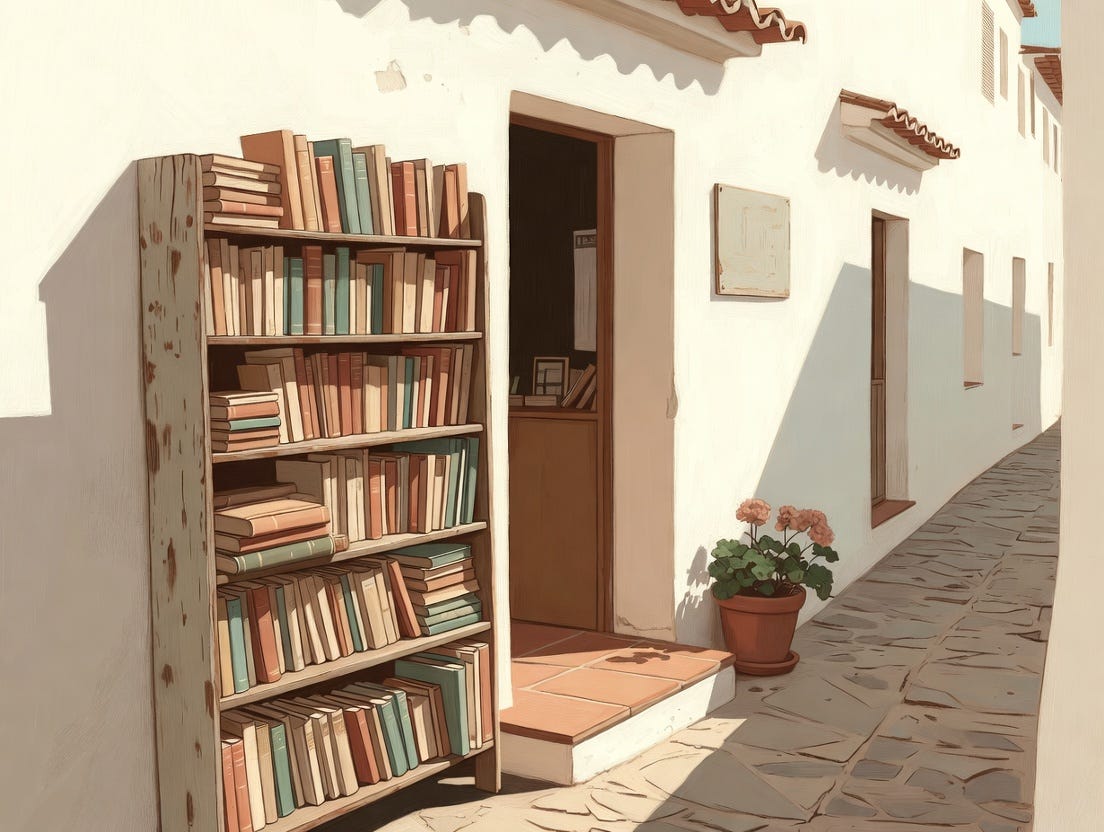
Recently, I ordered a copy of The Name of the Rose, Umberto Eco’s historical murder mystery set in a 14th-century Italian abbey, where a learned friar must investigate a series of deaths. I had read it once through an audiobook, but I wanted it in my library for reference and a future re-read. The condition of the book, however, was not what I expected.
I ordered it used, listed as “acceptable.” In my experience, that category usually means some markings inside and maybe cover damage. But this one had far more damage than expected. I threw away the dust jacket and investigated whether the discoloration and blotches I saw were mold.
Jokingly, I posted about this and said there should be a new, lesser category for used books; something more honest, called “deplorables.” This was in jest. But it got me thinking about what we expect from used books, what we’re willing to tolerate, and more importantly, what we stand to gain from them—scribbles, damage and all.

The cheapest books built the biggest readers
The publishing industry has gone through its whirlwind of closed bookstores, ebooks, web reading, and many other innovations over the last thirty years. And through all of it, the industry has proven resilient; nowhere more visibly than in the recent resurgence of independent bookstores and reading culture itself, a quiet but steady reclaiming of the printed page.
But when the New York Times reported on the end of mass market paperbacks, avid readers across communities expressed their sadness and nostalgia for the medium.
Mass market books were the answer for single-use, convenient, quick, and cheap reading. You could stop by a store in the airport and find a popular read for under ten dollars. This medium helped advance literacy and accessibility, all while making reading more popular across the board.
Ebooks, audiobooks, and a publisher shift toward more profitable trade paperbacks have slowly killed the format. And while we gained many good things, there’s still something missing when formats like mass market paperbacks and used books fall into obscurity.
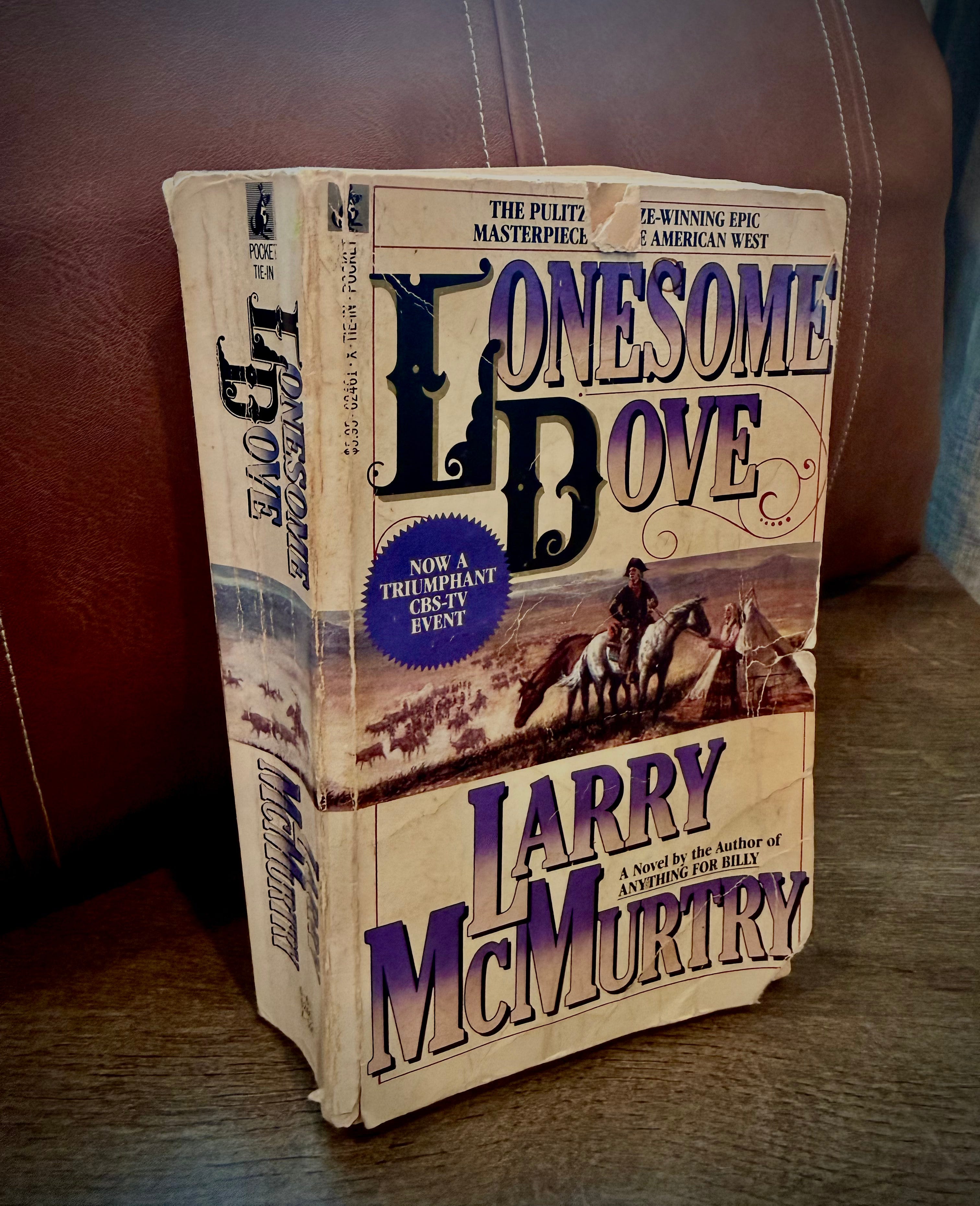
Thankfully, a damaged, used book on its last leg can serve as the mass market paperback replacement of the single-use read; and today, bookshops could advertise them as such.
Though it doesn’t match the aesthetic of the airport bookstore with its glossy magazines and new releases, something like these less-than-acceptable books can still serve readers in the same way mass market paperbacks once did.
But the beauty of these books doesn’t end with functionality. Used books, no matter the condition, offer a third dimension to reading.
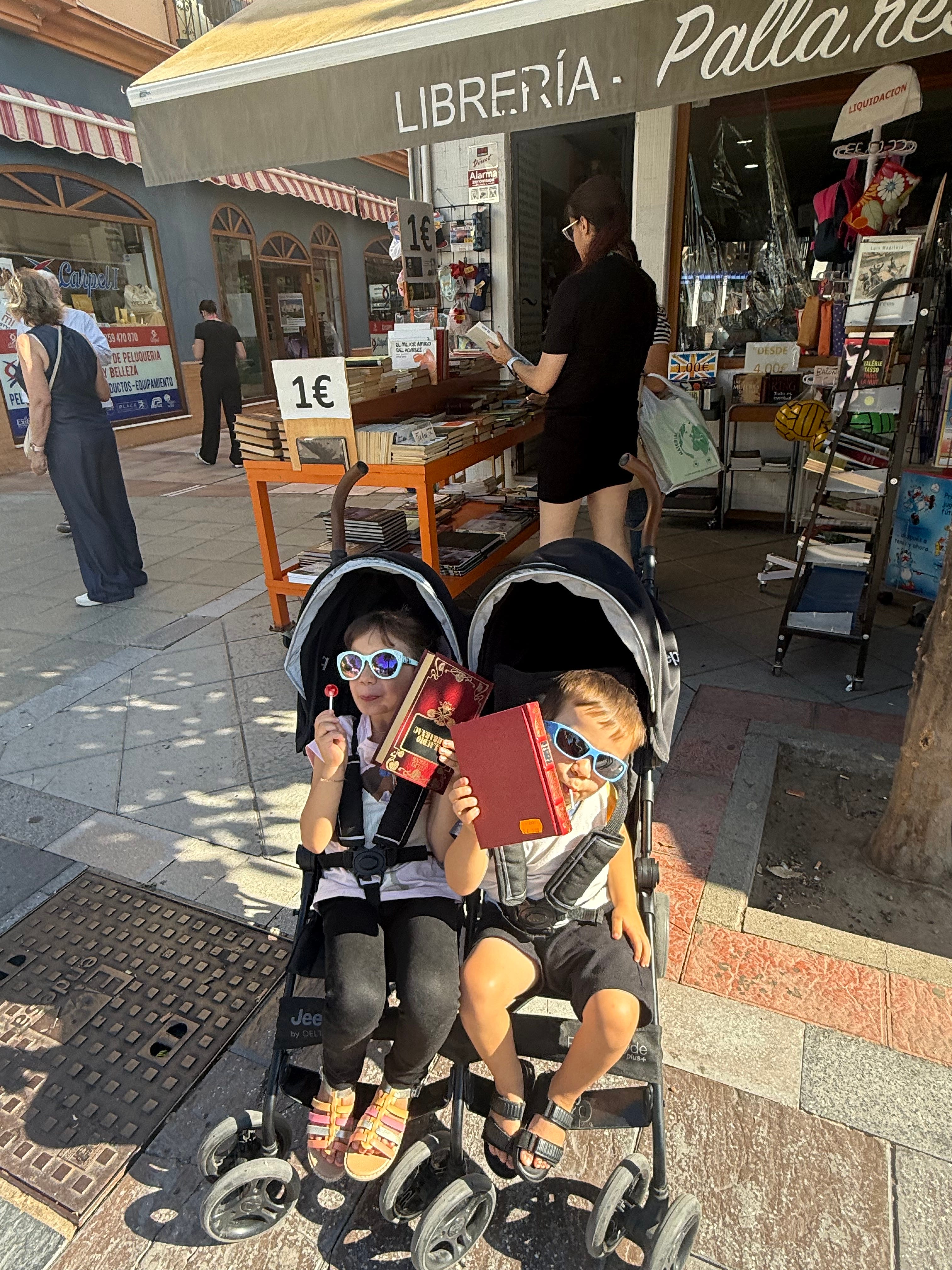
Another dimension and the argument for slowing down
The notes and scribbles that you find in used books offer a new glimpse into your reading experience. Unfortunately, annotation is a dying act. This shift was on full display when a TikToker confidently declared, "If you can't read a book without annotating it, you need help."
We have come to value speed; high reading goals, high book counts, over depth and absorption. When you annotate, you run contrary to that culture. A book that might take a few days to read now takes a few more.
But that raises the real question: what are you trying to get out of reading?
Beyond entertainment, if you’re after insight into the human condition, empathy, or genuine knowledge of a subject, you often don’t need to read more books; you need to read fewer, better ones and retain what you learned well enough to actually benefit from it.
Annotation forces you to think and process far beyond the surface of the text. The same is true of book clubs and classrooms, where dissecting a work and wrestling with it turns it into something that genuinely influences your life rather than passing through it.
The reader who uses footnotes reads a different book
To understand this new dimension, footnotes offer a useful parallel. When reading a book with footnotes, there’s an entire meta-layer to the experience.
The reader can learn more about a particular event, travel the rabbit holes of the subject, and gain a richer understanding of the text, much like an introduction or prologue, but on a detailed, granular level.
But footnotes are also something more than context. They are the original rabbit hole—the first technology that let a reader leave the text and return to it changed. In that sense, footnotes predate the hyperlink by centuries and do something the hyperlink never quite managed: they keep you inside the book. The rabbit hole has a floor. You go down, learn something, and surface back into the same sentence with new eyes. The internet’s version of this has no floor and rarely returns you to where you started.
What’s worth noticing is that footnotes, like annotations, are in decline. Academic texts still use them; popular nonfiction increasingly doesn’t. The reading culture that values speed and volume has little patience for the apparatus of depth. We have traded the digression—one of the great pleasures of serious reading—for frictionless forward motion. The same impatience that killed the footnote is what makes a stranger’s marginal notes feel like an intrusion rather than an invitation.
But this is precisely the first layer of what used books restore.
Someone already read this book. That’s the point.
These days, I prefer to buy used books because of this added context. A valuable used book will have highlights, notes, underlinings, and scribbles from a past reader; and more beneficially, sometimes from more than one reader.
As you read, you gain insight from someone else’s experience. If it’s an older copy, you also get a window into what someone was thinking five years ago, or even decades ago.
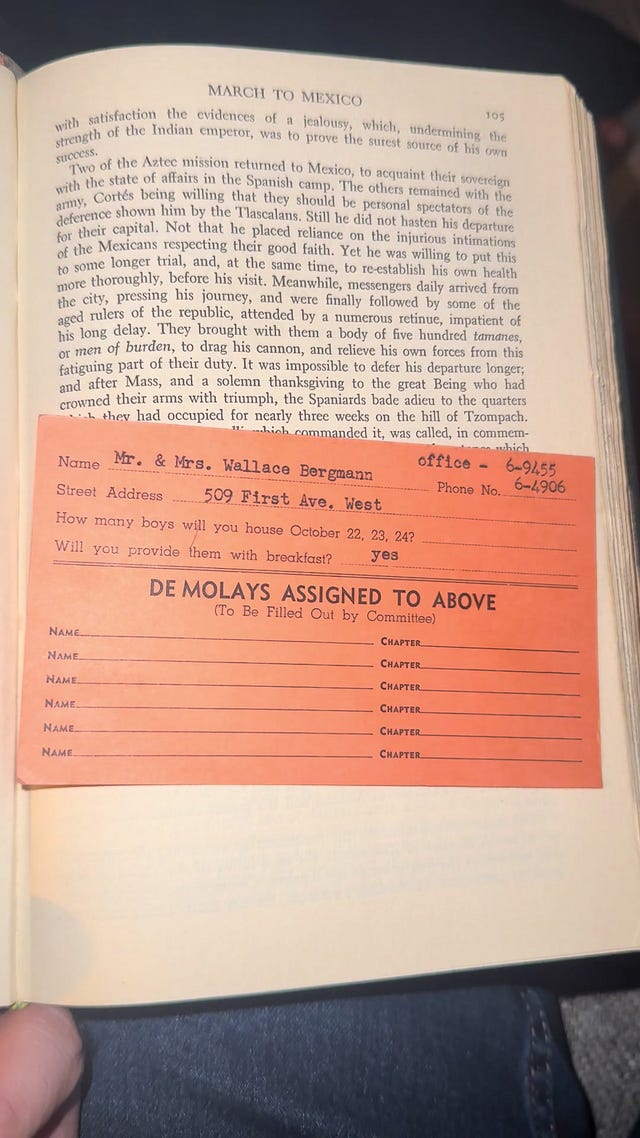
In my copy of The Conquest of Mexico, I found a De Molays membership card from possibly the 1960s tucked inside. I proudly leave it there because it tells a quiet story about previous owners. Along with old bookmarks, scribbles, and signatures, these traces add character and help build a breathing library.
 Tiktok failed to load.
Enable 3rd party cookies or use another browser
Every once in a while, I get my hands on a thoughtful reader who wrestled with the text and wrote those ideas down. I can read and join the journey with them; creating an experience no one else will have, because it’s my perspective, the author’s work, and another reader’s thoughts, time-capsulated together.
These experiences are never possible with new books, and it’s why choosing to purchase copies in old bookstores and online used stores offers so much more value to the reader.
The best gift you can give costs three dollars
I also find that gifting books I no longer need—or genuinely want to pass along to a friend—is far more sincere with my notes already inside.
When the friend receives the book and reads it, they’re getting my experience too, making the read intimate, as if I’ve invited them along for the ride. Seeing how much effort went into reading it—through the marked margins—they’ll also be more likely to appreciate the gift. And if we ever talk about it, they’ll already have some context on my perspective.
In many ways, this practice is a form of journaling. As you look at your library, you’re also looking at a piece of your consciousness.
Used books fix your attention span
Multi-dimensional reading offers a way out of this over-stimulated world; especially for those who struggle to focus for long periods of time. Between the text, a previous reader’s notes, and your own, you create healthy stimulation while re-regulating your mind.
This is a fully immersive experience. Even in waiting rooms, like at the doctor’s office, I find myself highlighting and marking away. It passes the time while keeping me entirely entertained and engaged, while others scroll their phones and let the time disappear with little to no value.
This practice also prevents unwanted skimming and poor retention. You process the work more slowly and thoughtfully. And when it’s time to re-read, you aren’t starting over; you’re digging deeper, with more life experience and education, finding new gems in the same work.
What the market for new books gets wrong
Some might say more books means more chances to find the ideas worth keeping—and there are occasions where that makes sense. If you’re newly curious about a subject and unsure how much you want to invest, skimming broadly has its place. But true retention comes from wrestling with ideas, from critical thinking.
It’s why an AI summary, a podcast episode, or a Wikipedia entry can tell you everything about a book without any of it sticking. You recognize the ideas in the moment and forget them shortly after.
Receiving books with notes and marginalia works on the same principle from the other direction; you piggyback on someone who has already walked the path you’re now on, inheriting a perspective you might never have found alone—while still bringing your own reading and your own notes to the encounter.
A market that only values new books misses this entirely. And when you look at your own library, it’s rarely the pristine copies you treasure most. It’s the ones that have aged, that have character; which is, not coincidentally, exactly the allure of vintage books.
Every book you annotate is a gift to a stranger
Collecting used books, and taking notes in the ones you have, is a community exercise. Someone has invested in you—whether they know it or not—by sharing their thoughts on a subject. We can do the same by recording our own thoughts for the future. Perhaps someone thirty years from now will find your copy in a thrift store and benefit from your experience.
As the publishing industry continues to change, we will always have used books to choose from. They offer more context, character, and connection for the reader. And that’s why I believe we should invest in them and champion their value, both for utility and for the added dimension they bring to reading.
I have found old photographs in used books that I purchased at used bookstores or through ThriftBooks. I feel sad because there's no way to know who these belonged to, some of them are decades old, and they were probably stuck in there and used as bookmarks and forgotten.