


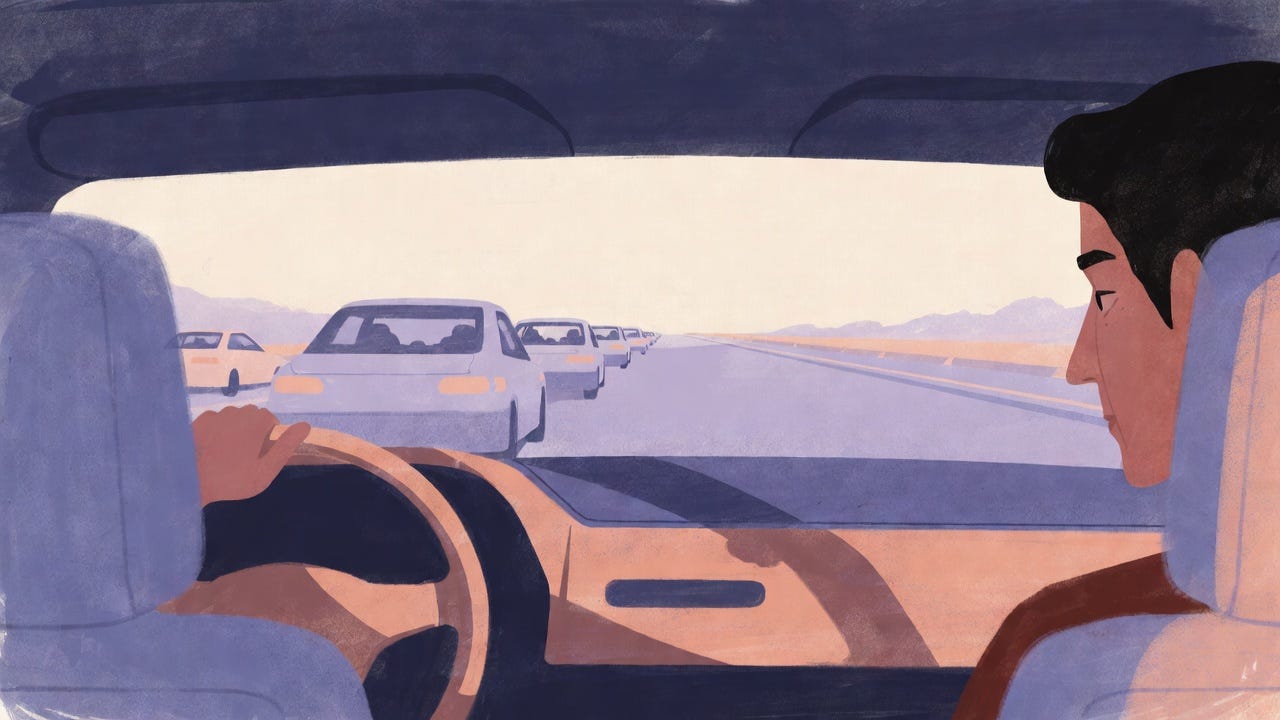
Every morning, millions of people sit inside a metal box, inching forward, and reveal who they are. Traffic doesn’t only slow you down; it shows how you respond to being slowed down. That response, it turns out, is one of the more honest reflections of your character.
South Florida gave me plenty of opportunity to test this.
I’ve dealt with enough traffic here that I’ve gotten used to it. I grew up with the traffic of West Palm Beach, the passive-aggressive drivers in Boca on my way to FAU, and the Fort Lauderdale and Miami traffic on weekend visits to family.
We now live further north, but we often made long drives to Boca while my wife was pregnant and to Miami for family gatherings. Along the way, we’ve sat through jams caused by accidents and the regular rush-hour flow. Of course, we are not the only ones dealing with this. Traffic is a universal problem.
Because of this shared experience, traffic reveals something interesting about human behavior. In a traffic jam, most people fall into one of three patterns.
Some get angry; hands on the horn, muttering at strangers, arriving wherever they’re going already defeated.
Others escape: they put on a podcast, scroll their phone at red lights, do anything to avoid sitting with the discomfort.
And a few, a smaller few, simply accept it. They go still. They let the traffic be traffic.
These patterns reveal more than how we handle traffic — they reflect how we handle life.
What traffic reveals about us
We all have off days, but our consistent reactions during traffic reveal something deeper about us.
Our response to traffic shouldn’t be judged by the one instance where we lost control. What matters are the patterns. We might ask ourselves: Am I regularly losing my patience when someone cuts me off? Do I grow frustrated whenever I’m stuck bumper-to-bumper?
What we often discover is that these same reactions appear in other parts of our lives. I’ve noticed it in myself; the same impatience I feel toward a slow driver surfaces when a meeting runs long, or when a conversation doesn’t go the way I expected. The trigger changes. The response doesn’t. Traffic, in this sense, is not an excuse for our feelings — it is a revealing moment.
Traffic is a gift
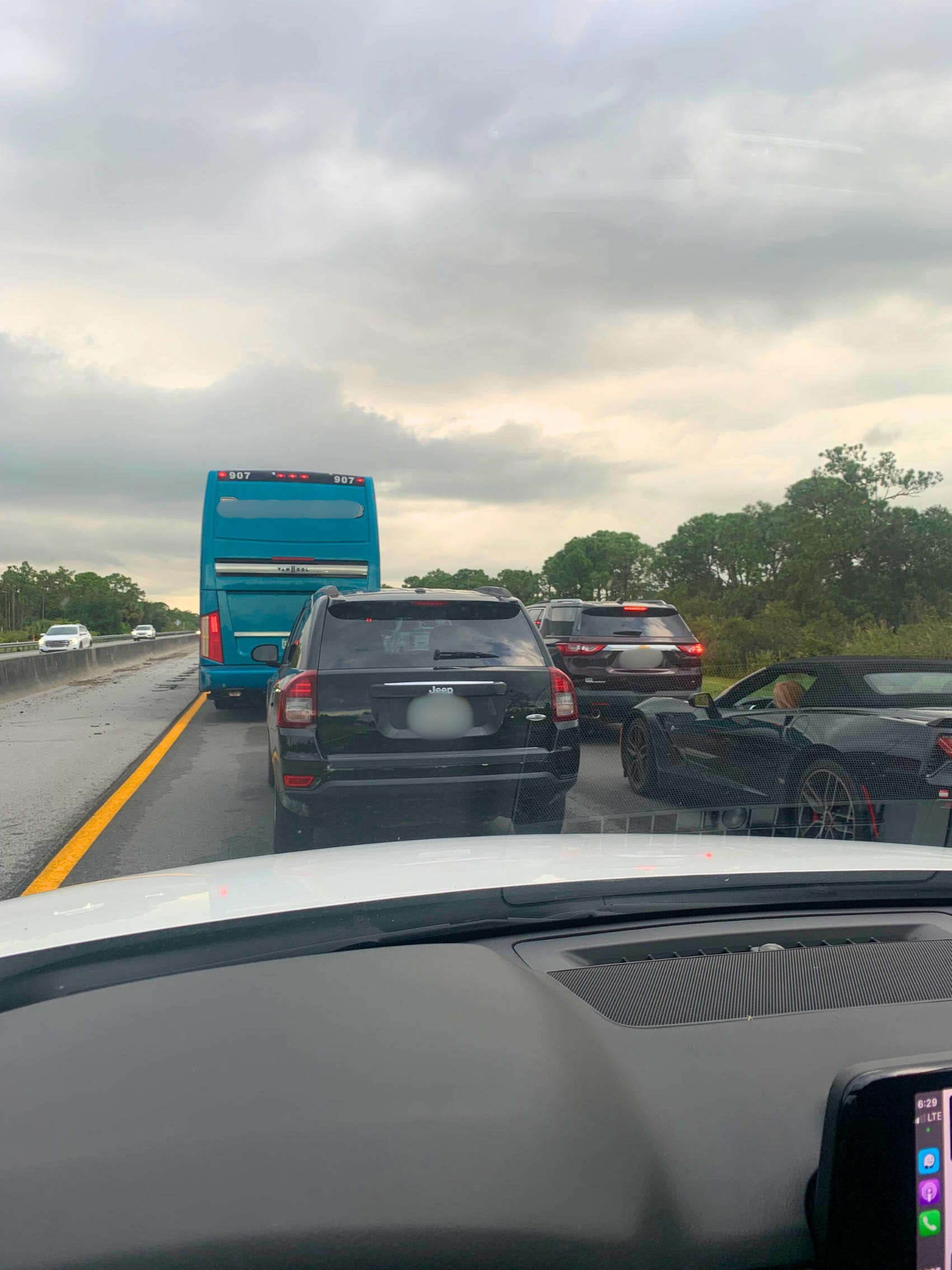
For that reason, traffic can be a gift.
Where else do we get the opportunity to practice managing our emotions in such a safe environment? A traffic jam becomes a daily exercise for the mind.
When we feel anger, it might lead to reckless driving or exaggerated hand gestures directed at nearby drivers. This anger often represents a refusal to accept reality. Instead of controlling our emotions, we allow the circumstance to control them.
The second option is escapism, which is where I often find myself. I remember sitting in standstill traffic on I-95, listening to Rubicon: The Last Years of the Roman Republic, Tom Holland’s account of Rome’s collapse — absorbing the fall of an empire while ignoring the frustration of my own commute. In itself, this isn’t necessarily bad. But it becomes a problem when we use it to avoid the situation entirely.
Even without these distractions, our minds may wander. I might start thinking about a future trip, a movie I recently saw, or a meetup I’m supposed to have with a friend later in the week. These moments aren’t harmful on their own, but they become a hindrance if we use them purely to escape reality.
The final option is peace.
“Traffic, in this sense, is not an excuse for our feelings — it is a revealing moment.”
Choosing peace means being fully present and accepting the circumstance as it is. You might still have music or other entertainment, but it becomes peripheral. The traffic, the impatient drivers, and the slower passage of time no longer disturb you.
In fact, the delay might even become useful. You might rehearse a presentation out loud, think about how you can help someone in your life, or reflect on ideas for your day. Unlike escapism, you are not ignoring what is in front of you. Instead, you accept it and even use the moment to your advantage.
To master traffic — to master the unfortunate — is to study and appreciate your surroundings and learn from them. It is, ultimately, to be at peace.
Andy Weir’s novel Project Hail Mary offers a striking example of this. Its protagonist, Ryland Grace, wakes up alone on a spacecraft with no memory of his own name, two dead crewmates for company, and a mission that was designed as a suicide run. He has every reason to despair. Instead, he orients himself to his circumstances and begins solving problems one at a time. His survival — and eventually, the survival of humanity — depends not on what he wished were true, but on his willingness to fully inhabit the situation in front of him.
Grace had no choice in his circumstances. Neither, most mornings, do we.
“To master traffic — to master the unfortunate — is to study and appreciate your surroundings and learn from them. It is, ultimately, to be at peace.”
Justifiable reasons for frustration
Of course, some might argue that there are legitimate reasons to feel upset in traffic.
Perhaps you are running late for work or an important appointment. Maybe you value your time and hate the feeling that it’s being wasted. These are fair concerns. But they still don’t require unrestrained emotional reactions.
Traffic is only one part of the larger equation of life. Often, the pressure we feel in traffic is the result of earlier decisions — leaving the house too late, mismanaging our time beforehand, or relying too heavily on our personal sense of control.
We can control some things, but we cannot control our circumstances. Seneca, the Roman Stoic, understood this well. He wrote that we suffer more in imagination than in reality, that the obstacle itself is rarely the problem; our resistance to it is. This tension between preparation and acceptance is one of life’s constant challenges.
Peace in traffic
Once we responsibly do what is within our control — planning ahead and accounting for possibilities like accidents or delays — we can begin to accept that setbacks will inevitably happen.
From that point forward, peace becomes possible.
This exercise is important because once we build this mental discipline, it carries into the rest of our lives. You develop the ability to deal with uncertainty, frustration, and inconvenience without losing control.
In that sense, traffic becomes more than an annoyance. It becomes practice for real life.
I often think of the scene in The Karate Kid where the protagonist must wax cars, paint fences, and sand floors — tasks that initially seem pointless. Over time, however, these small repetitions build muscle memory and prepare him for real combat.
That lesson does not only exist in fiction.
Experiences like traffic offer us the same opportunity: to quietly practice patience, presence, and acceptance — until those habits eventually shape how we face the rest of life.