


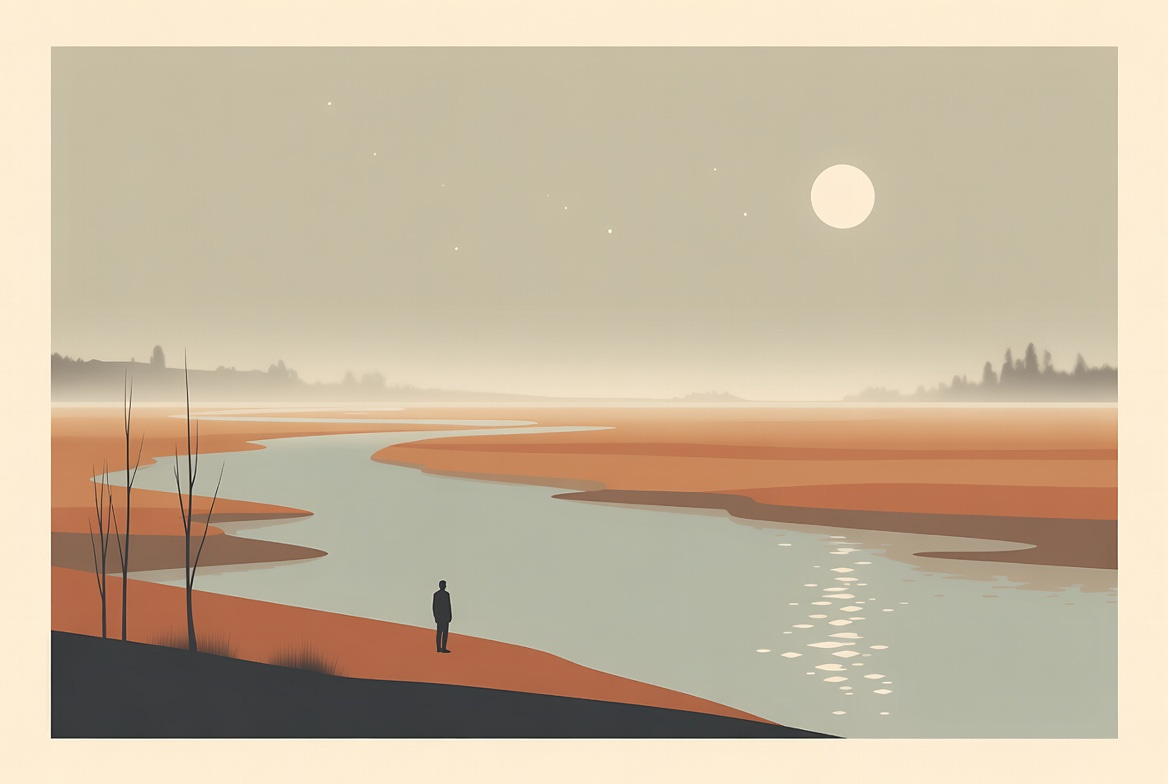
It’s easy to constrain yourself to a box. In my own life, dealing with big decisions like buying a home or moving, it felt like my options were limited to standard expectations. But one word always opened the door: perhaps.
There are other forms of this word — “what if” comes to mind — but perhaps is more confident, more realist and pragmatic. It offers permission to think outside the box, unconstrained by anxiety or common expectation. When successful, it becomes an “and then.” Perhaps is really the wellspring of curiosity. And to be curious under pressure or anxiety requires the ability to step back, watch things from afar, and ask the perhaps questions.
In Walter Isaacson’s biography of Elon Musk, he recounts the time Musk traveled to Russia to buy rockets. The Russians didn’t take him seriously.
On the flight home, Musk opened his laptop and built a spreadsheet detailing the materials and costs of building a midsize rocket himself. Originally, he had come looking for an existing technology. But when that door closed, he asked perhaps. This response stands in stark contrast to much of human nature.
When someone says no, we tend to get defensive — upset, or convinced there’s no other way through. But as eastern philosophy suggests, if you act like water, you don’t have to go through the rock; you flow around it and over it.
This is harder than it sounds. To flow like water requires first letting go of the direction you were already moving; it is, in itself, a form of surrender. Perhaps provides the intellectual space to do exactly that.
Emanuel Leutze’s Washington Crossing the Delaware captures this same instinct. On the night of December 25, 1776, Washington led a demoralized, supply-starved Continental Army across an ice-choked river in brutal winter conditions: snow, sleet, and strong currents.
Their target was a surprise strike on Hessian forces at Trenton. Conventional military wisdom said don’t move in such weather; don’t gamble everything on one crossing.
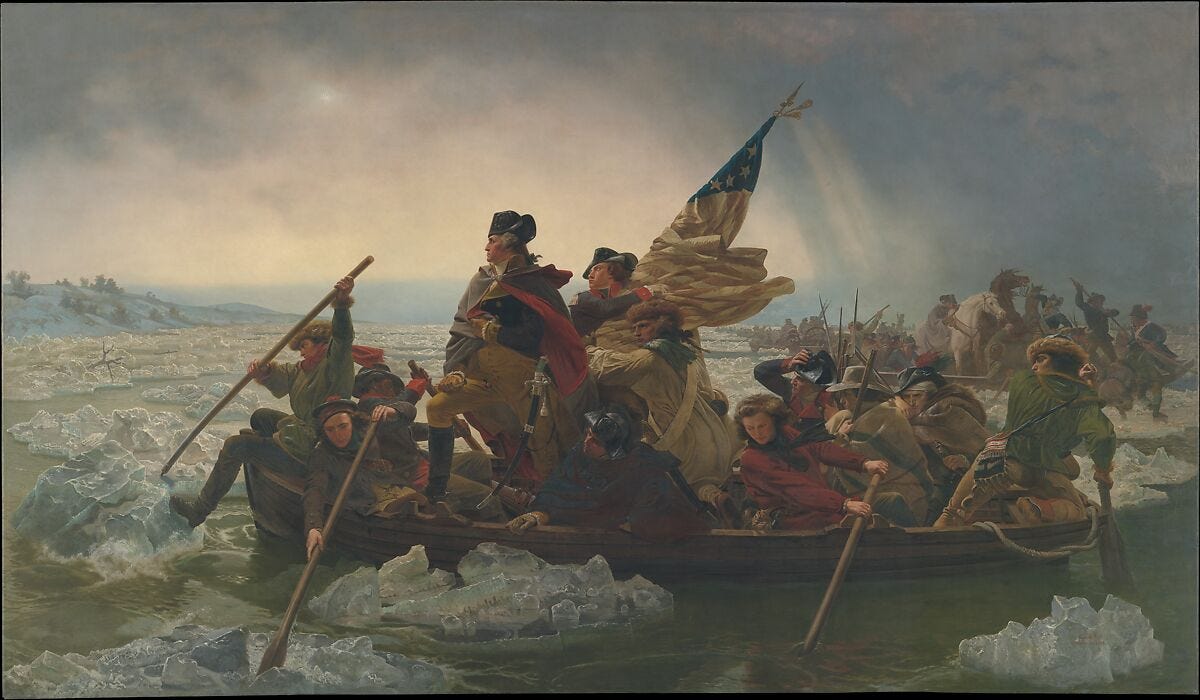
Many expected the revolution to collapse by spring. But Washington asked perhaps. Perhaps retreat wasn’t inevitable. Perhaps a daring, unexpected strike could work when everything else had failed.
The painting freezes that moment of contingency; the darkness, the ice, the uncertain faces capture the word perhaps in full: the willingness to act creatively on an open question. The river, then, represents the uncertainty of acting on perhaps — but also the opportunity waiting on the other side.
To practice a mindset of perhaps, one must understand that most things are fluid — never guaranteed, not even restrictions. Tolstoy writes in War and Peace, “Life is too long to say anything definitely; always say perhaps.” It’s that habitual positioning that can surface unobvious solutions to impossible problems.
The philosopher Bertrand Russell explores the related challenge of embracing uncertainty — and learning how to respond to it — when he writes, in A History of Western Philosophy, “To teach how to live without certainty, and yet without being paralyzed by hesitation, is perhaps the chief thing that philosophy, in our age, can still do for those who study it.”
The answer to not being paralyzed by hesitation is the practice of perhaps. “I am stuck in this situation and this solution won’t work. Perhaps I can do this.” And if one were to sum up philosophy in a single word, it could easily be perhaps. It is the love of knowledge. It is the challenge of normative thinking.
Perhaps, then, represents new opportunity, an answer to paralysis under pressure, and a call to curiosity. That last reason is key to its successful application. To be curious is to detach oneself from current distractions and pursue something for the joy of learning.
In that learning — not always, but often — comes something useful. But that usefulness is frequently lost when there is too much focus and pressure on utility. It must be an unbridled act of curiosity; a genuine love for knowledge, truth, and discovery.
Perhaps is the first word that invites that curiosity. And it’s why anyone who adopts that word and mindset can overcome some of life’s most difficult challenges — like crossing a frozen river in the dark when everyone expects you to fail.