


Maybe we weren’t normal teenagers. At least that’s how I felt when the police officer shined his beams on us in the parking lot.
My sisters and I are close in age, and we had a lot of the same friends. We also liked getting together for board games. Like most of Florida today, we lived in a gated community with a clubhouse. We invited several friends to join us for a game night, but our driveway wouldn’t hold all their cars, so we had them park in the guest lot at the center of the neighborhood. We met there, chatted, and were about to ride back together when the officer pulled up, parked facing us, and watched.
We didn’t think anything of it, as one wouldn’t when they’re innocent and doing something fairly wholesome. But right as we were heading out, he hit us with his beam.
Then he got out of the car, demanding to know if we were throwing some kind of party, already braced for a scene. Our faces went pale. And when we told him we were going to play a board game, we sounded exactly like what we weren’t: liars. He looked as confused as we felt. We laughed about it later, in private, the way you do when something is too strange to explain.
I’ve thought about that night many times since. What made a group of teenagers gathered in a parking lot so unreadable to that officer?
We were doing something increasingly rare: gathering in person, with intention, around a shared activity that required nothing but each other’s presence.
Each day, we lose more of these analog, in-person experiences to technology, social media, and the frictionless pull of screens. But something is pushing back.
Recently, news spread of younger generations returning to what their grandparents once did: knitting, crocheting, baking from scratch. These aren’t nostalgic gestures so much as deliberate ones, a rejection of the dopamine-saturated pace of modern life in favor of things that are slow, tactile, and real.
Board games belong to this same impulse; and like those other analog rituals, they do something screens have never managed: they reliably bring people together and keep them there.
“Each day, we lose more of these analog, in-person experiences to technology, social media, and the frictionless pull of screens. But something is pushing back.”
They are also some of the oldest and most enduring human inventions. In Stefan Zweig’s Chess Story, he explains his excitement about chess: a game he describes as constantly evolving yet sterile, limitless yet bounded. A child can play it, and an international grandmaster can play it; it belongs to everyone and to every era.
Zweig captures this experience precisely:
“Is it not already an insult to call chess anything so narrow as a game? Is it not also a science, an art…a unique yoking of opposites, ancient and yet eternally new, mechanically constituted and yet an activity of the imagination alone, limited to a fixed geometric area but unlimited in its permutations, constantly evolving and yet sterile, a cogitation producing nothing, a mathematics calculating nothing, an art without an artwork, an architecture without substance and yet demonstrably more durable in its essence and action form than all books and works, the only game that belongs to all people and all eras…Any child can learn its basic rules, any amateur can try his hand at it; and yet…masters unlike any others evolve…”
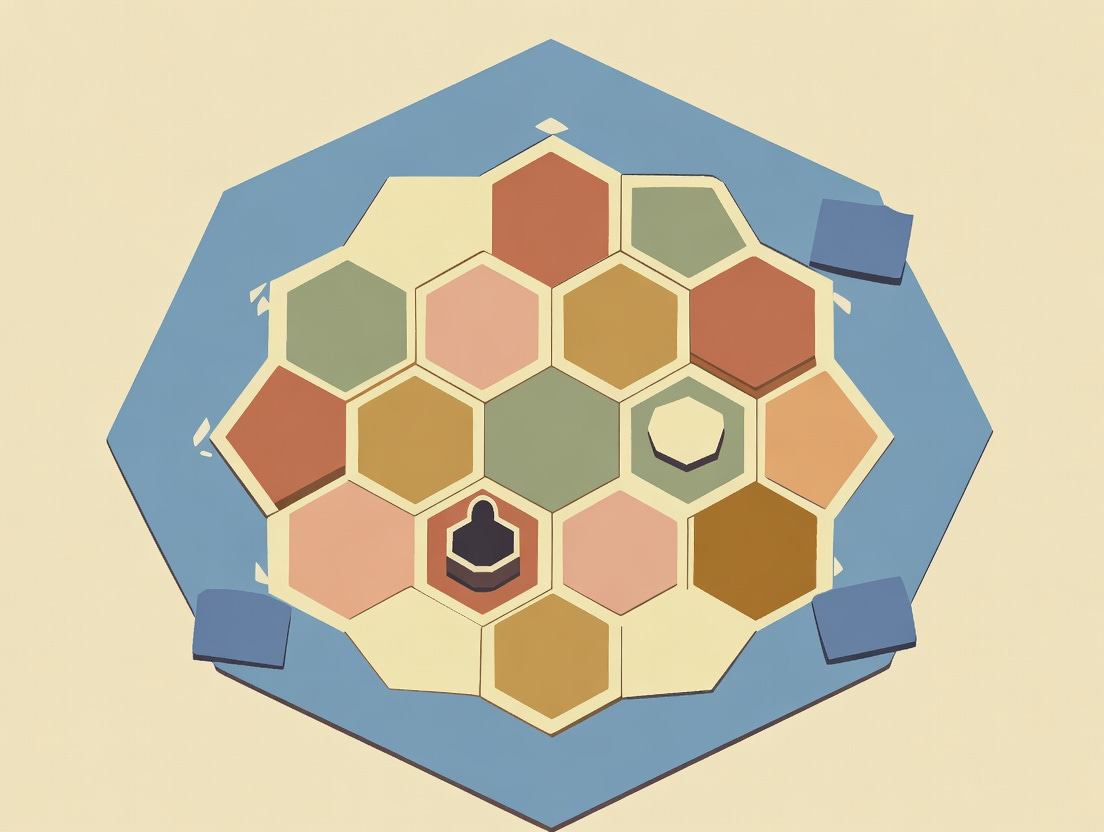
I think about the game Catan the same way.
I find myself obsessed with it precisely because it holds the same paradox: a novice and an expert can sit down together, and both find themselves genuinely challenged.
The board itself changes every game; the hexagon tiles shift, the ports move, the numbers redistribute. No layout can be memorized. No single strategy dominates. There’s luck, but not enough to absolve you; there’s skill, but not enough to guarantee you. That tension is what makes it, to my mind, a nearly perfect game.
But the game is almost beside the point. What board games offer that almost nothing else does is two uninterrupted hours of conversation and competition: in person, without an exit ramp.
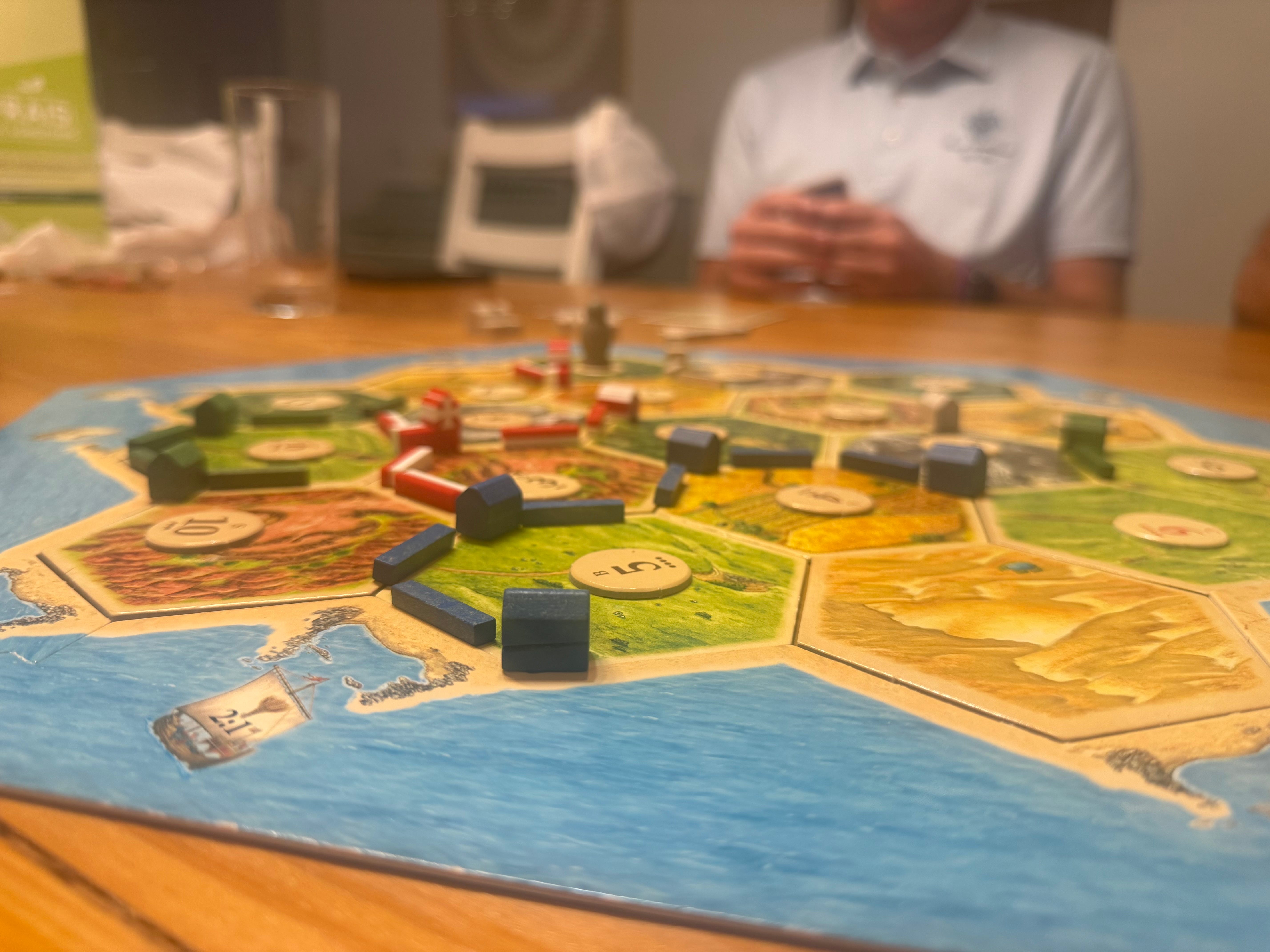
When you go to dinners or outings where people are half-distracted by their phones, the moments that could become memories dissolve before they form. Board games seal that leak. They create what I’d call a third state; not a third place, but a mental and experiential space where distraction isn’t just discouraged, it’s structurally impossible.
You come back from that space with something: an inside joke, a shared grievance, a story. You find yourself referencing that one game of Catan a year later with people you might otherwise have lost touch with.
“What board games offer that almost nothing else does is two uninterrupted hours of conversation…”
Part of what makes this possible is the restraint built into the game itself. There are a fixed number of pieces, clear rules, and defined limits: a container. This is almost aggressively countercultural. We live in an age of total access; any information, any video, any distraction, available instantly and endlessly. The effect isn’t expansion but saturation. There’s no time to think, to sit and write with what we’ve taken in. We absorb without processing, and too much of anything unprocessed becomes overflow: like a plant watered past its capacity, it doesn’t grow, it drowns.
Loneliness has become one of the defining crises of our time, and it is in large part a crisis of presence: we are more reachable than ever and less available to each other.
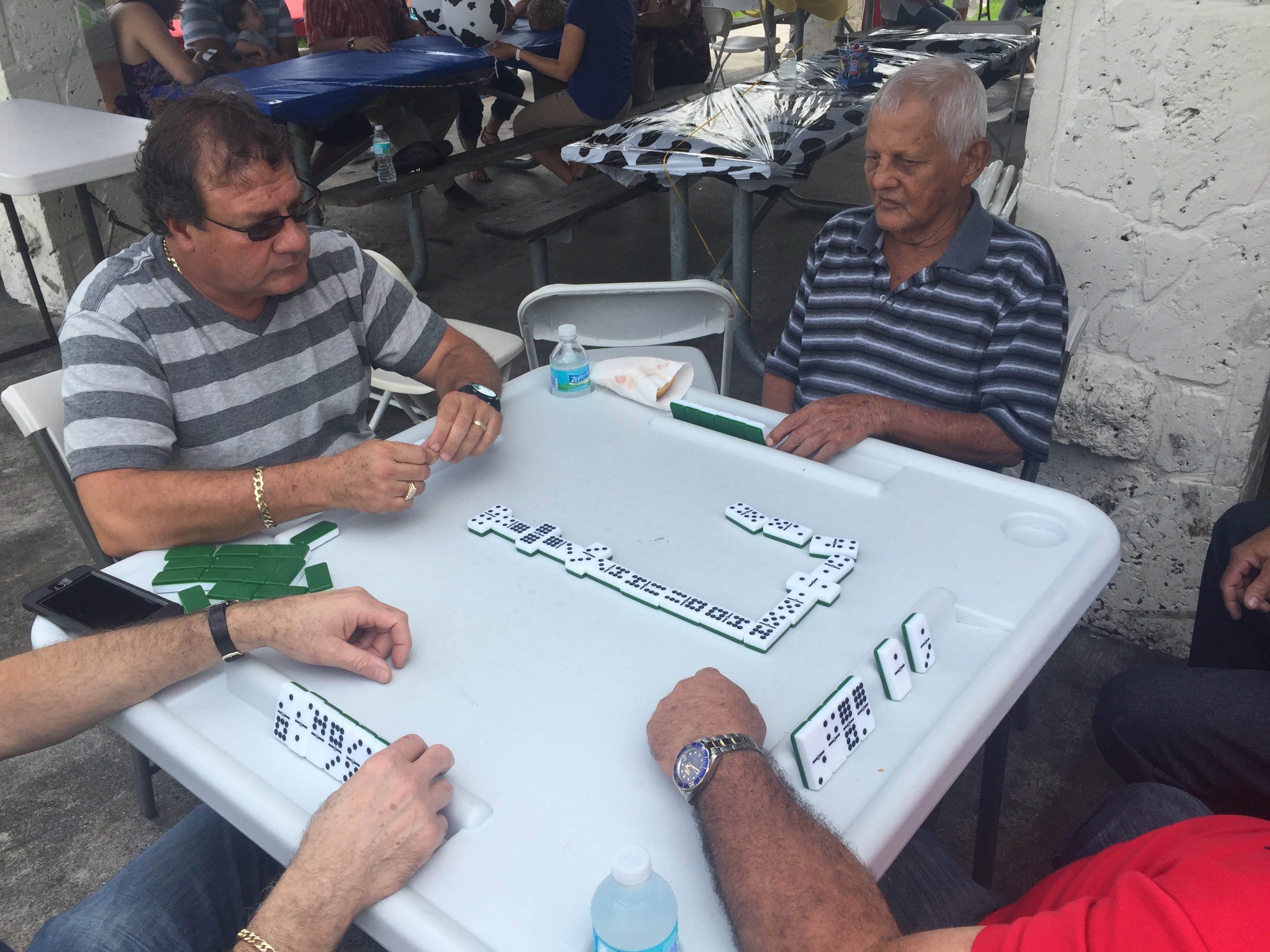
Board games are a surprisingly direct remedy. They require you to show up, stay put, and pay attention to the people across the table. Some find this kind of grounding through fishing on a pier, or a recurring conversation group; the specific activity matters less than the structure it provides. But few activities are as accessible or as repeatable as pulling a game off a shelf and calling a few people.
“…a third state; not a third place, but a mental and experiential space where distraction isn’t just discouraged, it’s structurally impossible.”
When I play games like Catan and post a picture, friends reach out. Not about the game, but about wanting to be part of whatever was happening around it: the conversation, the room, the feeling of being somewhere that was actually somewhere.
That’s what cafes understand when they host trivia nights, and what neighborhood Facebook groups are fumbling toward when they post event flyers. People are looking for these moments. There aren’t enough of them.
You don’t have to wait for an institution to provide one. You can pull a game off a shelf, invite people the same day, and find others eager to show up. These gatherings are harder to replicate than we think and more necessary than we admit. Apparently, that’s strange enough to warrant a police investigation.