


These days, I rarely use a printer. I can sign things or handwrite a form with an Apple Pencil and send almost anything I need to digitally. But every so often, there’s no other option but to print.
A couple of weeks ago, my wife and I took our son to the Passport office in Miami for a last-minute, same-day application — his first passport.
I had printed passport photos for my other two children before; I knew the dimensions, had done the design myself, and figured this time would be no different.
But the photo I prepared was slightly too small.
A simple mistake, and suddenly the picture was useless. We had to leave the office, ride down to the building’s ground floor, and pay a company to take a new one. It was, in the end, a much better photo.
To hand in the paperwork in person, I also needed to print it, and reviving my home printer was the only real option.
Printing at a store would mean running copies of our driver’s licenses and a birth certificate through a public machine — a security risk I wasn’t willing to take. So we printed at home; and between the photo mishap and the printer, I was reminded that some things are only valued when you need them.
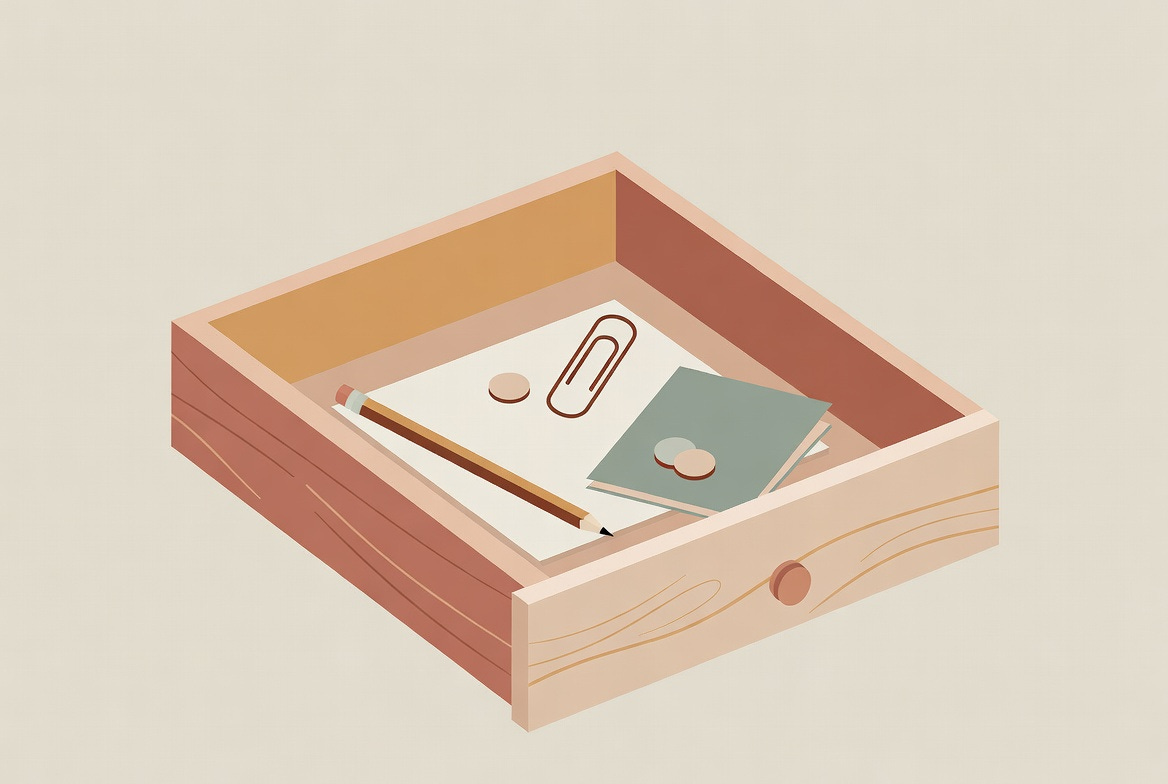
When I printed those pages, I needed something to hold them together. A staple wouldn’t do; I’d need to separate them at the counter. The paperclip was the answer.
We didn’t have a box of them.
I searched my desk, the drawers around my office, every crevice I could think of, hoping to find a rogue one somewhere. Eventually, I found a small one. Not ideal, but it held our papers together and did its job.
A paperclip is an essential tool. It holds the most important documents you could have. But its real value is in its flexibility: you can remove it easily to reorder pages; if the stack is too large, you can bend the clip wider and it still holds.
In Kurt Vonnegut’s novel Player Piano, the protagonist, Dr. Paul Proteus, is something like a paperclip.
Paul manages Ilium Works in a society where automation has displaced most human labor; machines handle the rest, and the people rendered unnecessary live across the river in a district called Homestead. Paul holds things together. But over time, he grows weary.
His father, George Proteus, was a legendary figure in the same industry — a standard Paul is expected to surpass. Instead, Paul keeps crossing the river, watching the displaced workers live out hollow lives, and asking a question:
“If they were so fond of the old system, how come they were so cantankerous about their jobs when they had them?”
They hadn’t valued what they had until it was gone. Paul sees this clearly; then, slowly, he turns the same question on himself.
His willingness to bend his perspective is what pulls him toward revolution. He joins the Ghost Shirt Society, helps lead an uprising, and fails. But the failure doesn’t negate the act. He held a belief, and a question worth asking — even as the system closed back in around him.
The idea of printers and paperclips has stayed with me, especially as I’ve been getting to know my new 3D printer.
It’s a good machine; I can print without much friction. But if I wanted to design my own pieces, that’s another matter entirely.
Engineering from scratch means going back to first principles: how things clip, screw, set in place, and match other parts. The technology is new; the principles aren’t. And to fully appreciate what the printer can do, I need the flexibility to learn what I don’t yet know.
To bend, like the clip.
To see the value of the essential — the rarely noticed — it helps to slow down and take stock.
When I get overwhelmed, I name specific things I’m grateful for, and the entire trajectory of my day changes. The forgotten paperclips start to appear: the ones scattered in crevices, overlooked in drawers. The inconveniences shrink. My goal, ultimately, is peace. If you have peace in your home, you have everything.
Perhaps the answer, for the paperclips at least, is simply putting them back in a box. Ready to be noticed and found; rarely used but essential. There when you need them.