


Coffee has been part of my life for as long as I can remember. As a child, I dipped my toast into my café con leche, though mine probably had a teaspoon of actual coffee, and I remember watching my dad drink it every morning and again in the afternoon. It was a quiet ritual that shaped our days. Over time, I began drinking stronger coffee myself. First, every other day. Then daily. Then multiple times daily, until it became part of my rhythm.
The drinks I enjoyed changed as I grew. I started with café con leche, then drip coffee with milk and sugar, until I relied on cafecitos and coladas. Eventually, the cafecito turned into an espresso with no sugar. Today, I stick to an Americano in the morning, an espresso in the afternoon, and on some days, I treat myself to a cortado.
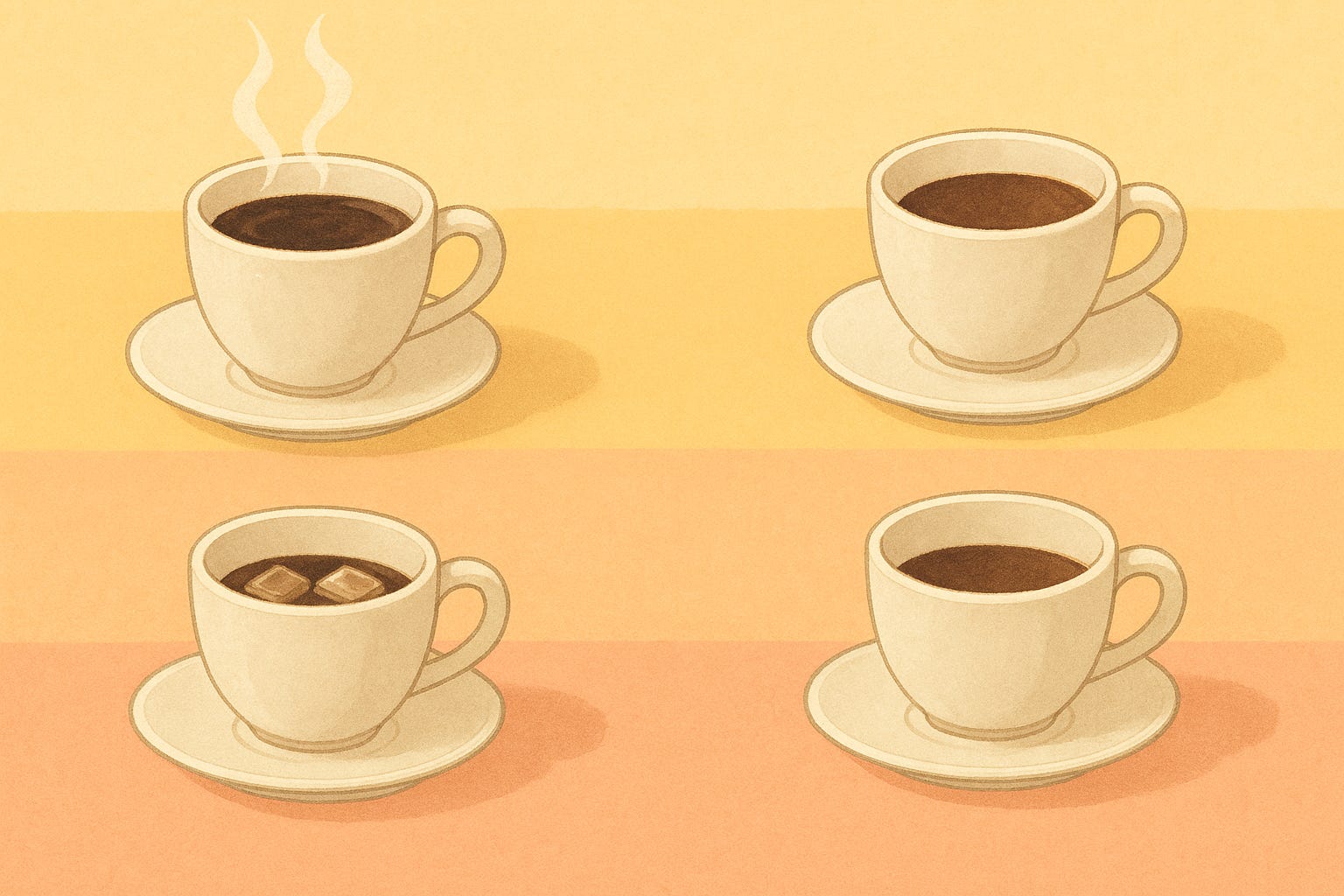
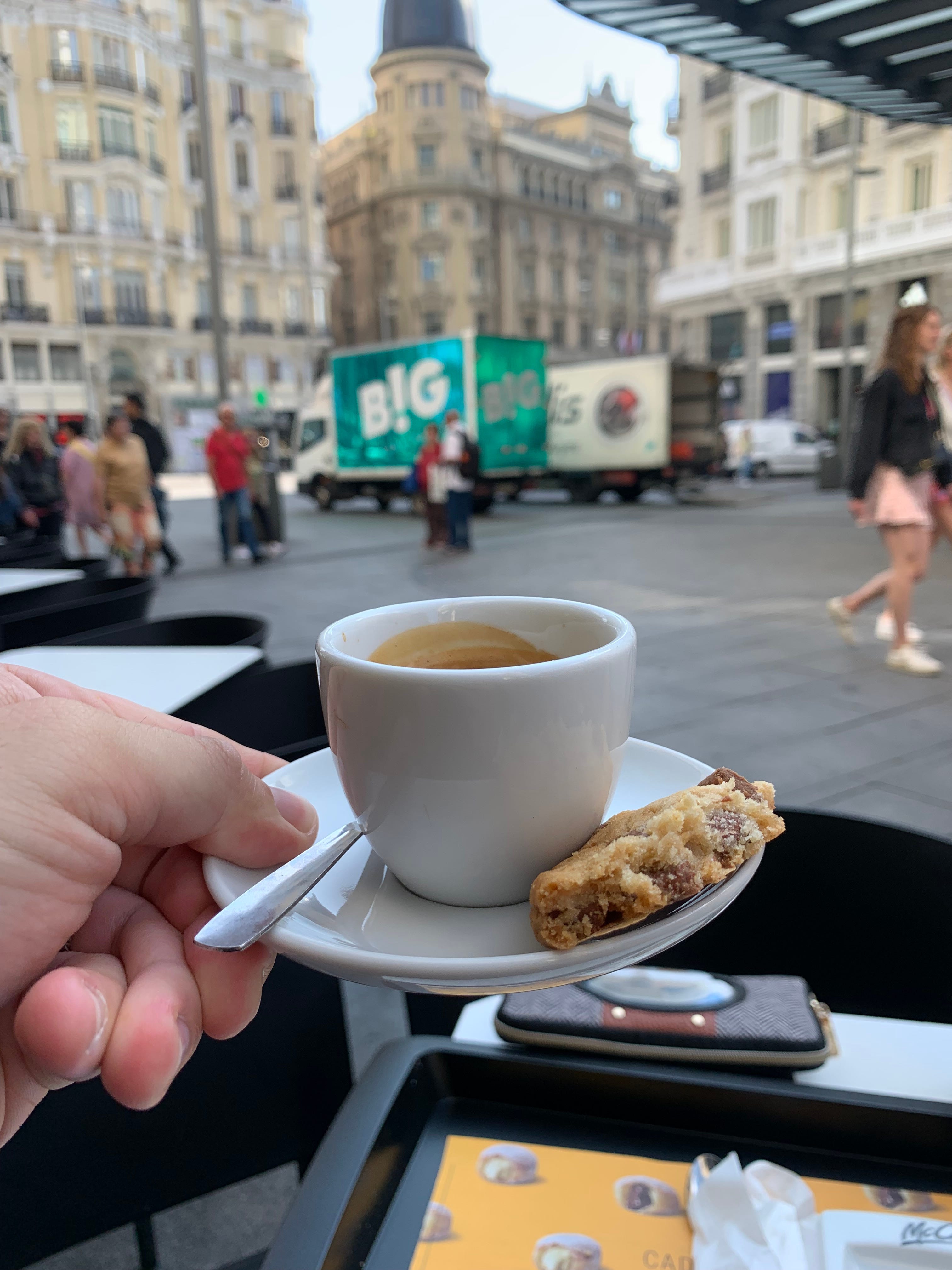
One habit from my coffee routine grew naturally. After long hours working at a coffee shop or in an office, I noticed that drinking larger cups like drip coffee, an Americano, or a café con leche became a kind of dance. I would start hot and sip slowly. Then the cup turned warm, then room temperature, and finally cold. Over time, I grew to appreciate these stages. Thinking now, it reminds me of a journey, descending through layers almost like Dante’s Divine Comedy.
II. Coffee as a clock
This experience can be summed up as slow drinking, the idea that a cup can be enjoyed at every stage, temperature, and texture. These stages create different emotional experiences.
Hot: a brief urgency to enjoy the coffee at its most familiar
Warm: presence and appreciation
Room temperature: stillness and acceptance
Cold: a small reinvention
Coffee becomes a multi-dimensional experience that explores the varying qualities of a single cup.
Most people try to freeze their drink in one state, rushing for a warmer or abandoning it once it cools. But the shift from hot to warm, and from warm to room temperature, is fleeting and easy to miss, even though those transitions hold something meaningful.
III. Learning to notice the transitions

Drinking coffee in these stages reminds me of life’s rhythms. Most transitions go unnoticed until they are fully behind us. A child stops asking for help with their shoes. Your morning run slows without your permission. A hobby you once picked up for fun becomes the thing people come to you for. These subtle, almost invisible moments reveal small truths about our journey. Each threshold holds meaning if we slow down and appreciate it.
Each stage of our lives has something to offer at its own pace. Heat, or moments of accomplishment and celebration, fades fast but transforms us. We look back on those times as mile markers. When life cools or slows, we begin to understand everything we experienced to reach this stage.
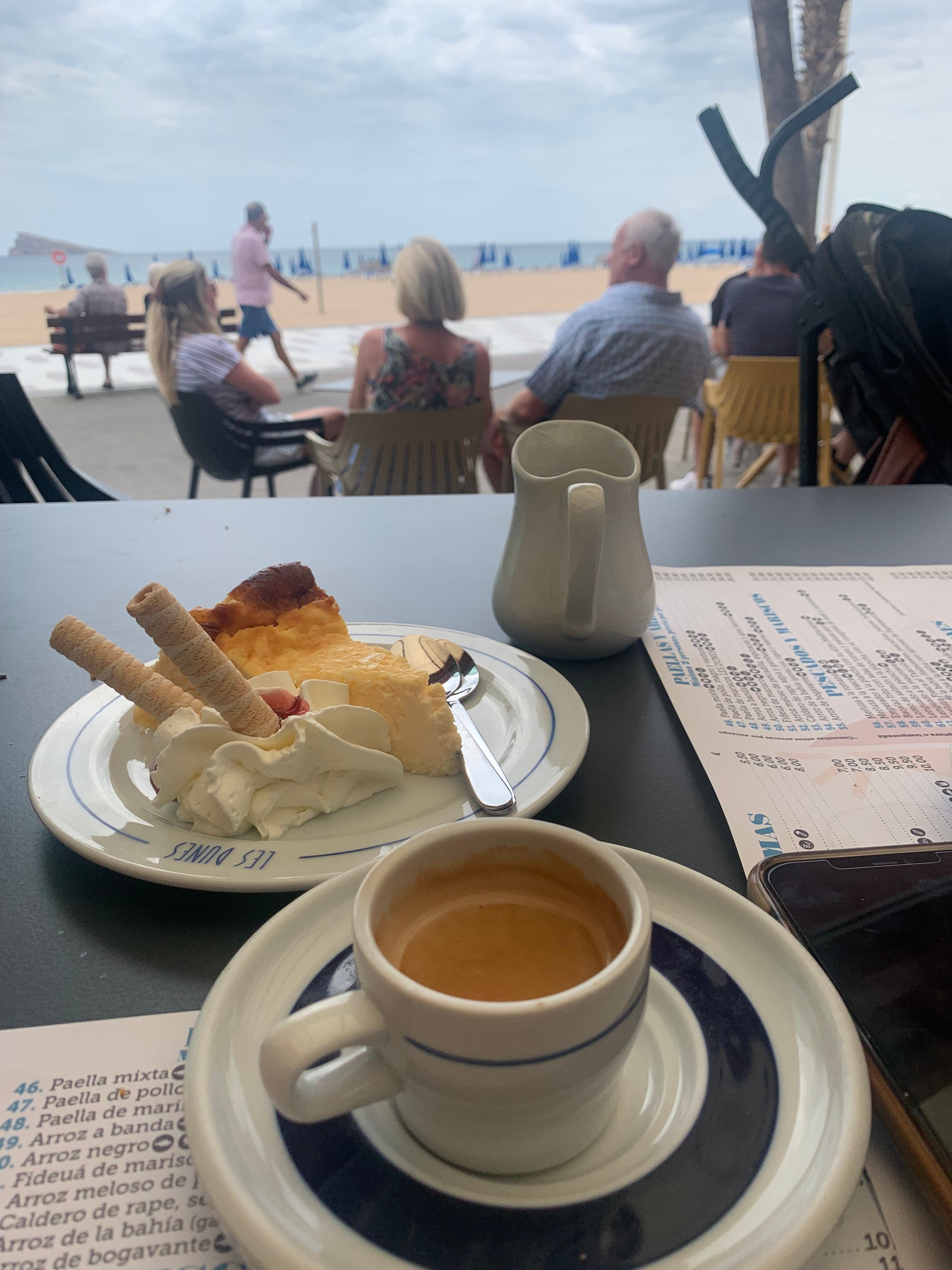
The cooling cup reflects a different part of who we are.
Hot, warm, and cold form a quiet continuity between who you were, who you are now, and who you are becoming. Growing up drinking café con leche, I can take that same cup hot and remember childhood. As it grows warm and then cold, I reflect on how this drink followed me from child to father. A small ritual somehow holds an entire life inside it.
When you see these stages together, and the value of different experiences within the same substance, the lesson becomes simple: savor what you have. The mundane moments are often the truest ones. How we interpret them reveals what matters to us and who we are becoming. In their own way, these transitions carry us gently down through the layers of our days, if we’re willing to notice them.