


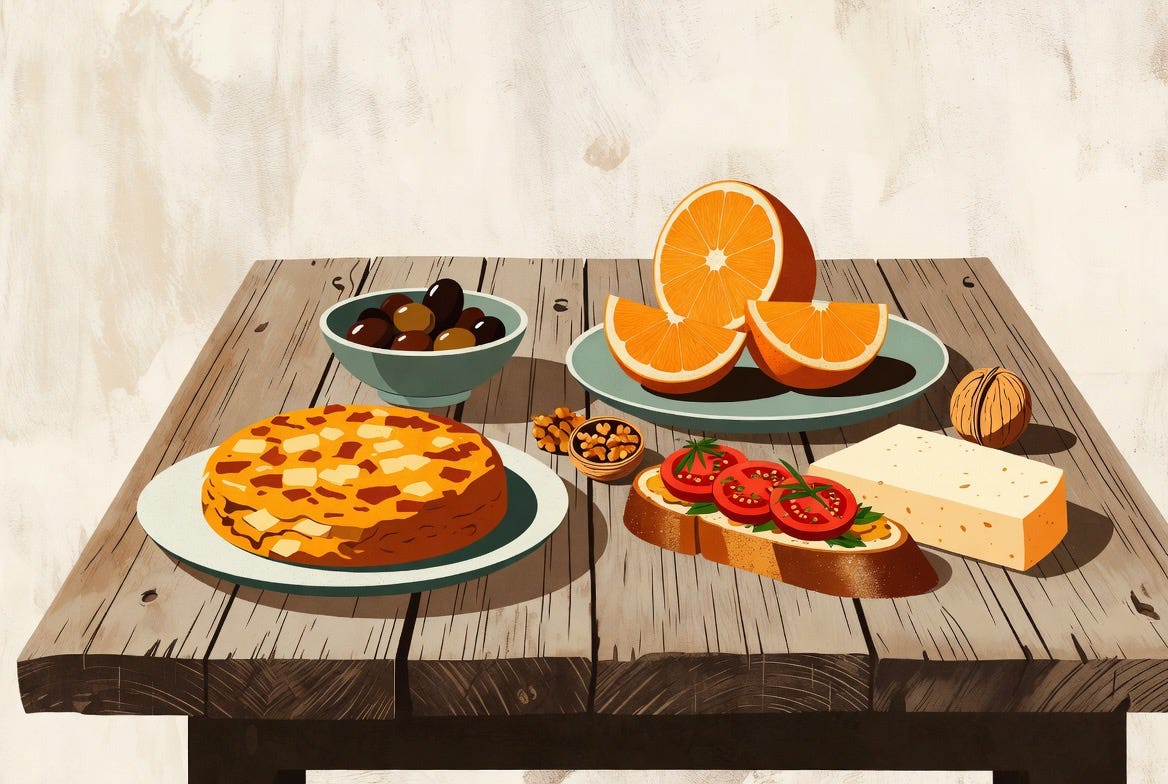
My wife and I enjoy creating tablas — charcuterie boards filled with cheeses, fruits, nuts, jams, honeys, pickles, and whatever delicacies we can find. But there’s nothing special in a tabla on its own.
Some look like Lunchables; others you think about a year later. Quality and presentation both matter, but the real value isn’t only in the taste or the sight. It’s in something deliberate.
What makes an experience like a tabla memorable is curation. Curation is the discipline of saying no to most things while selecting the best possible choice for the theme, occasion, and goal you have in mind.
Samuel Johnson understood this instinctively. When he set out to compile his Dictionary of the English Language in 1746, he didn’t try to capture every word in circulation. He curated — drawing from the best English writers of the previous two centuries, selecting the words and quotations he believed were worth preserving. The result, published in 1755, became the standard of the English language. By choosing what went in, he helped formalize a civilization’s tongue.
You can find this value almost anywhere. I think of my personal library.
My rules: a book earns its place only if it interests me, is re-readable or referenceable, and something I could keep forever. If it doesn’t make the cut, I give it away. What I get is a shelf that’s uniquely mine — no one else will have one like it.
Yesterday was my birthday. My wife and I hosted a gathering at the park and asked everyone to bring a tapa. On the table: Tortilla Española, Gambas al Ajillo, bocaditos, bruschetta, Cuban pastelitos, picanha slices, tomato and mozzarella salad, walnuts, olives, oranges, and more.
My wife and I chose what would fit together for our items; and everyone brought something special to them. No caterer could have planned what was on the table— layered, surprising, and completely unrepeatable. Like a fingerprint.
This matters more as innovation accelerates.
On Instagram, you might come across Murphy Campbell — a banjo artist who documents, records, and shares old Appalachian ballads. She was recently a victim of AI cloning: someone replicated her voice and released music under her name. Her supporters were upset, but their response was also telling.
Many said they follow her not only for her singing but for her dedicated curation of endangered music. She digs up lost, often local, songs; ties personal stories to them — a conversation with a producer, a tune passed down through mountain families for generations — and brings them back to life. Like an archivist, she recovers lost things and returns them to the light.
Independent bookstores tell a similar story. In a Planet Money episode on bookstore economics, a host interviews the owner of an independent shop in Louisville, Kentucky. She walks through her selection process: whether an author has a local audience, whether they’re planning to tour the area, which specific customers she’s buying a copy for. This is part of why independent bookstores are making a quiet comeback — they offer community connection and a curated selection designed to match the people who walk through the door.
These are all the same instinct. Everyone carries a unique taste and can share their love of something through intentional, categorized selection. It’s a piece of themselves.
I think about this when my wife and I are building a tabla. The board doesn’t start with everything — it starts with a question: what belongs here, for this moment, for these people? The answer is always different.
As digital experiences multiply and AI fills more of the creative space, that human desire for connection won’t shrink — it will sharpen.
What we lose when moments become automated is soul; it’s authentic authorship. And what we gain with curation, when a moment is personal, is the sense that someone was paying attention, and chose this, for you.
We like to indulge too, but we have found less is more.